
blog
BPC-157 & TB-500 & GHK-Cu Blend
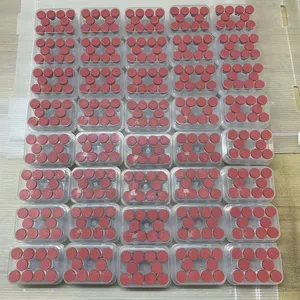
Jul
Buy BPC-157 & TB-500 & GHK-Cu Blend in the UK: Research Buyer’s Guide
Researchers planning to Buy BPC-157 & TB-500 & GHK-Cu Blend should examine more than the product name or advertised price. A dependable purchase requires clear component quantities, traceable batch information, analytical testing and suitable storage guidance.
This three-component formulation is often marketed under the name GLOW peptide blend. However, “GLOW” is a commercial blend name rather than a universally standardised scientific formulation. The amount of BPC-157, TB-500 and GHK-Cu may differ between products.
Wuhan Top Miracle Peptides currently lists a BPC-157, TB-500 and GHK-Cu blend in its research peptide catalogue. The website also references a 70 mg version of the product. Buyers should confirm the exact component ratio for the batch available at the time of ordering.
This guide explains what to check before buying the blend in the UK, including identity, purity, vial content, Certificates of Analysis, storage and wholesale ordering.
Research-use notice: This article covers laboratory research materials. It does not provide medical advice, dosage information, injection instructions or recommendations for human use.
What Is a BPC-157, TB-500 and GHK-Cu Blend?
The product combines three separate research materials in one vial:
- BPC-157
- TB-500
- GHK-Cu
Each component has a different molecular identity and research background. Combining them may be convenient for a study that requires a fixed three-component formulation.
However, a blend also creates additional quality-control questions. Researchers need to know whether each component has been correctly identified, measured and tested.
BPC-157
BPC-157 is a synthetic 15-amino-acid peptide. Published literature has examined it mainly in laboratory and animal models, while dependable human safety and effectiveness evidence remains limited. A recent scientific review classifies BPC-157 among unapproved peptides promoted for musculoskeletal and performance-related purposes.
TB-500
TB-500 is commonly associated with an acetylated fragment containing the sequence LKKTETQ. Scientific analytical work has identified TB-500 as an N-terminally acetylated fragment of thymosin beta-4 rather than the complete thymosin beta-4 protein.
A supplier should therefore distinguish clearly between:
- TB-500
- The LKKTETQ fragment
- Full-length thymosin beta-4
These names should not be used interchangeably without supporting product specifications.
GHK-Cu
GHK-Cu is a copper-binding tripeptide containing glycine, histidine and lysine.
Published research has investigated GHK-Cu in areas involving fibroblast activity, collagen-related pathways, extracellular matrix biology and skin-remodelling models. Much of this evidence concerns GHK-Cu as an individual compound rather than the complete three-peptide blend.
Is This Blend the Same as GLOW Peptide?
Many suppliers use GLOW peptide as a commercial name for a blend containing:
- BPC-157
- TB-500
- GHK-Cu
Wuhan Top Miracle Peptides uses the same three components when distinguishing GLOW from its four-component KLOW blend. Its KLOW listing states that KLOW adds KPV to the three peptides found in GLOW.
The name alone does not confirm:
- The amount of each ingredient
- The total vial content
- The chemical form of each component
- The analytical purity
- The batch identity
Always review the actual product specification.
Check the Blend Ratio Before Ordering
The total number of milligrams does not explain how that total is divided.
For example, a 70 mg vial could contain one supplier-specific ratio, while another 70 mg product could use a different ratio.
Before placing an order, ask:
- How much BPC-157 is included?
- How much TB-500 is included?
- How much GHK-Cu is included?
- What is the total peptide content?
- Does the ratio remain the same between batches?
- Is the ratio shown on the vial label?
- Is quantitative testing available?
Do not assume an equal three-way ratio. GHK-Cu is often supplied in a larger quantity than the other components in commercially marketed blends, but the exact Wuhan Top Miracle Peptides formulation should be confirmed from its current batch documents rather than inferred from competing products.
Why Researchers May Choose a Three-Peptide Blend
A predefined blend may be useful when a laboratory protocol requires all three components at a fixed ratio.
Potential procurement advantages include:
- One product code
- One batch record
- Fewer separate vials
- Simplified inventory management
- A repeatable component ratio
- Easier wholesale ordering
- Fewer laboratory preparation steps
However, convenience should not replace experimental control.
Separate peptide vials may be more appropriate when researchers need to:
- Test each component independently
- Change individual concentrations
- Compare single compounds with the blend
- Use separate control groups
- Identify which component caused an observed response
- Study concentration-dependent effects
- Confirm individual solubility and stability
The correct format depends on the research design.
Research Areas Associated With the Components
Scientific literature has examined the individual components in several preclinical research areas.
These include:
- Cellular migration
- Fibroblast activity
- Actin-related processes
- Extracellular matrix remodelling
- Collagen-related pathways
- Angiogenesis models
- Oxidative-stress models
- Experimental tissue-repair pathways
GHK-Cu literature includes in vitro and in vivo findings involving skin remodelling and collagen-related activity. BPC-157 literature remains predominantly preclinical, while TB-500 is associated with a fragment of the actin-binding region of thymosin beta-4.
These areas of investigation do not prove that the commercial blend:
- Heals injuries
- Treats pain
- Repairs tendons
- Reverses ageing
- Improves athletic performance
- Regrows hair
- Produces guaranteed cosmetic results
- Is safe for personal administration
Ingredient-level findings should not be presented as clinical proof for the combined formulation.
How to Choose a UK Peptide Blend Supplier
Professional buyers should evaluate the company and the product separately.
Verify the Supplier’s Business Information
Look for:
- Legal company name
- Registered business information
- UK contact details
- Working telephone number
- Professional email address
- Physical or registered address
- Shipping policy
- Returns policy
- Privacy policy
- Wholesale ordering process
- Verifiable licence details
When a supplier describes itself as licensed, it should be prepared to provide:
- Licence number
- Name of the licence holder
- Issuing authority
- Activities covered
- Expiry or renewal information
Do not assume that ordinary company registration proves authorisation to manufacture, import or distribute medicinal products.
Review the Product Description
A reliable product page should clearly state:
- Complete product name
- Component names
- Quantity of each component
- Total vial content
- Product format
- Storage condition
- Batch-document availability
- Research-use classification
- Wholesale availability
- Current stock status
The Wuhan Top Miracle Peptides product page currently advertises a high-purity BPC-157, TB-500 and GHK-Cu blend and refers to research involving angiogenesis, extracellular matrix and wound-related pathways. Those claims should remain carefully qualified as research areas and supported with current batch documentation.
Test the Customer Support
Send a detailed enquiry before placing a large order.
Ask for:
- Current batch number
- Exact component ratio
- Total content
- Certificate of Analysis
- HPLC data
- Mass spectrometry results
- Quantity-verification method
- Storage requirements
- Processing time
- Shipping method
- Wholesale price
The response should be direct and consistent with the product page.
How to Check Peptide Blend Purity
A statement such as “98% pure” or “99% pure” does not provide a complete quality assessment.
Ask:
- Was each component tested separately?
- Was the finished mixture tested?
- Can the method distinguish all three components?
- Does the report show a chromatogram?
- Is the sample batch clearly identified?
- Which laboratory conducted the test?
- Was molecular identity confirmed?
HPLC Purity Testing
High-performance liquid chromatography can separate components within a sample and report the relative area of detected peaks.
A useful HPLC report may include:
- Sample name
- Batch number
- Test method
- Chromatogram
- Main peaks
- Secondary peaks
- Retention times
- Reported purity
- Date of analysis
- Laboratory information
Testing a three-component mixture is more complicated than testing one isolated peptide.
Ask whether the HPLC method can:
- Separate BPC-157 from TB-500
- Separate both peptides from GHK-Cu
- Identify impurity peaks
- Quantify the individual components
- Confirm the stated ratio
A single combined percentage may not establish the purity or amount of each ingredient.
Mass Spectrometry Identity Testing
Mass spectrometry may help determine whether the detected molecular masses are consistent with the expected components.
The report should ideally show:
- Expected mass for BPC-157
- Observed mass for BPC-157
- Expected mass for TB-500
- Observed mass for TB-500
- Expected mass for GHK-Cu
- Observed result for GHK-Cu
- Sample or batch number
- Test date
HPLC and mass spectrometry provide different information. HPLC generally supports purity assessment, while mass spectrometry can support molecular identity.
Quantitative Component Testing
Identity and relative purity do not automatically confirm the amount in the vial.
A complete quality package may also need to address:
- Total peptide content
- Individual component quantities
- Water content
- Counter-ion content
- Copper content
- Filling tolerance
- Net material weight
This matters when a product is described as a 70 mg blend.
What Should the COA Include?
A batch-specific Certificate of Analysis should connect the test results to the actual product being supplied.
Look for:
- Complete blend name
- BPC-157 quantity
- TB-500 quantity
- GHK-Cu quantity
- Total stated content
- Batch or lot number
- Sample number
- Date of analysis
- Test methods
- Specifications
- Actual results
- Testing laboratory
- Approval information
Depending on the laboratory application, buyers may also request:
- Complete HPLC chromatogram
- Mass spectra
- Water-content result
- Residual-solvent test
- Counter-ion information
- Copper assay
- Heavy-metal testing
- Endotoxin testing
- Sterility testing
- Microbial-limits testing
Not every test is necessary for every research application. Buyers should define their requirements before ordering.
Match the COA to the Product Batch
Compare the document against:
- Vial label
- Outer box
- Product strength
- Component ratio
- Invoice
- Batch number
- Dispatch information
A COA from a previous or unrelated batch should not be presented as evidence for the batch being sold.
Where possible, request a photograph showing:
- Current product label
- Batch number
- Vial strength
- Packaging
- Tamper seal
Safety and Regulatory Considerations
Safety information for this blend should remain cautious.
The FDA’s current safety-risk information states that BPC-157 may raise concerns involving immunogenicity, peptide-related impurities and active-ingredient characterisation. It states that limited information is available to determine whether BPC-157 could cause harm through proposed human routes of administration.
The same FDA resource notes limited human safety data for injectable GHK-Cu and identifies possible concerns involving aggregation, immunogenicity and peptide-related impurities. For TB-500, the agency states that it has not identified human exposure data sufficient to understand its safety risks.
In the UK, CAP and ASA guidance states that medicinal claims cannot be made for an unlicensed product. Prescription-only medicines also cannot be advertised to the public.
For compliant website content:
- Do not claim that the blend treats injuries.
- Do not describe it as an approved medicine.
- Do not publish personal injection instructions.
- Do not publish dosage schedules.
- Do not promise recovery or cosmetic results.
- Do not claim it has no side effects.
- Do not suggest that effects are guaranteed.
- Do not imply MHRA approval without evidence.
- Clearly describe the legitimate research context.
A “research use only” statement does not make contradictory therapeutic advertising acceptable.
How to Store the Blend
Storage requirements should come from the product label and batch-specific technical information.
General factors that may affect peptides include:
- Heat
- Moisture
- Oxygen
- Light
- Repeated temperature changes
- Damaged seals
- Repeated opening
- Freeze-thaw cycles after solution preparation
Before ordering, ask:
- What is the unopened storage temperature?
- Does the vial require light protection?
- Is frozen storage recommended?
- Is stability information available?
- What type of container is used?
- How should a temperature excursion be assessed?
- What storage condition applies after laboratory preparation?
Do not publish one universal shelf life for every peptide blend.
Add an internal link from this section to your article:
How to Store Research Peptides Properly
Wholesale BPC-157, TB-500 and GHK-Cu Blends
Wholesale purchasing may be relevant to laboratories, distributors and repeat professional buyers.
Prepare the following information before requesting a quotation:
- Required formulation
- Component ratio
- Number of vials
- Number of boxes
- Destination country
- Required documentation
- Preferred delivery date
- Expected repeat-order schedule
- Packaging requirements
Ask whether the quoted price includes:
- Product cost
- Batch COA
- Additional testing
- Packaging
- Shipping
- Insurance
- Customs documents
- Taxes or duties
- Payment charges
Link this section to your dedicated Bulk Orders page rather than repeating all of its content.
UK and International Shipping
Before placing a UK order, confirm:
- Processing time
- Courier
- Tracking
- Packaging method
- Delivery estimate
- Signature requirement
- Damage-reporting process
- Temperature controls where required
International customers in Europe, the USA and Canada should also review:
- Local import rules
- Product restrictions
- Customs requirements
- Courier limitations
- Taxes and duties
- Delivery delays
- Buyer-document requirements
Do not guarantee customs clearance. The buyer should confirm the legal and import requirements that apply in the destination country.
Why Consider Wuhan Top Miracle Peptides?
Wuhan Top Miracle Peptides currently has a dedicated product page for the BPC-157, TB-500 and GHK-Cu blend. Its catalogue also presents the formulation as a 70 mg product and links it with the company’s broader research peptide range.
Strengthen the product and blog pages by publishing verifiable evidence such as:
- Exact component ratio
- Current batch number
- Redacted COA
- Complete HPLC chromatogram
- Mass spectrometry report
- Quantitative vial-content result
- Original product photographs
- Storage instructions
- Legal business details
- Relevant licence details
- Wholesale ordering terms
Avoid unsupported phrases such as:
- Pharmaceutical grade
- Medically proven
- Guaranteed healing
- Completely safe
- Clinically approved
- Zero side effects
- Guaranteed purity
Use only claims supported by current documentation.
How to Order the Blend for Research
Step 1: Review the Product Page
Confirm the available strength, product format and current stock.
Step 2: Request the Exact Component Ratio
Ask how the total vial content is divided between BPC-157, TB-500 and GHK-Cu.
Step 3: Request Batch Documents
Ask for:
- COA
- HPLC chromatogram
- Mass spectrometry data
- Quantity verification
- Storage information
Step 4: Confirm the Order Quantity
State the number of vials or boxes required.
For larger orders, request wholesale pricing.
Step 5: Confirm Delivery
Provide the destination country and postcode.
Review processing, shipping and customs information.
Step 6: Check the Final Quotation
Verify:
- Product name
- Component ratio
- Total quantity
- Number of units
- Batch information
- Documentation
- Shipping fee
- Delivery estimate
- Return conditions
Keep all invoices, analytical reports and order correspondence.
Frequently Asked Questions
What is a BPC-157, TB-500 and GHK-Cu blend?
It is a commercial research blend containing three distinct peptide materials in one vial. Exact quantities and ratios can differ between suppliers.
Is this product also called GLOW peptide?
Yes. GLOW is commonly used as a commercial name for a three-component blend containing BPC-157, TB-500 and GHK-Cu. The name does not guarantee a standard ratio.
Does Wuhan Top Miracle Peptides sell this blend?
The website currently lists a BPC-157, TB-500 and GHK-Cu product and references a 70 mg version in its catalogue.
Does every 70 mg blend have the same formulation?
No. The total vial content does not reveal the amount of each component. Request the exact batch ratio before ordering.
What should the COA show?
The COA should identify the product, component quantities, batch number, testing date, methods, specifications and results.
Can HPLC confirm all three ingredients?
A suitable HPLC method may separate the components and detect impurities. However, buyers should ask whether the method was validated for the complete mixture.
Why is mass spectrometry important?
Mass spectrometry can support molecular identity by comparing observed masses with the expected compounds.
Is 99% purity enough information?
No. A purity percentage does not confirm the total vial content, component ratio, molecular identity or sterility.
Is TB-500 identical to thymosin beta-4?
TB-500 is commonly identified as an acetylated LKKTETQ fragment associated with thymosin beta-4. It should not automatically be described as the complete full-length protein.
Is the blend approved to treat injuries?
The product should not be presented as an approved treatment. Evidence for the complete blend is limited, and UK advertising rules restrict medicinal claims for unlicensed products.
Can the blend be ordered wholesale?
Wholesale availability depends on current stock, quantity and destination. Contact the Wuhan Top Miracle Peptides bulk-order team for a quotation.
Does Wuhan Top Miracle Peptides ship internationally?
The company promotes supply to the UK and other international markets. Buyers should confirm current destination availability and local import requirements before paying.
Conclusion: Buy BPC-157 & TB-500 & GHK-Cu Blend With Confidence
Researchers looking to Buy BPC-157 & TB-500 & GHK-Cu Blend should verify the formulation before placing an order.
-
Peptide Purity Guide – Learn how we test and verify every batch
-
How to Store Research Peptides Properly – Essential storage and handling guidelines
-
Buy BPC + TB – The Wolverine Stack for tissue repair research
-
Product Catalogue – Browse our full range of research compounds
-
PubMed / NCBI – Search “BPC-157,” “TB-500,” or “GHK-Cu” for access to peer-reviewed preclinical studies and research papers
-
JAAOS Global Research and Reviews – Peer-reviewed research on therapeutic peptides in orthopaedics, including wound-healing peptides such as BPC-157, TB-500, and GHK-Cu
-
ScienceDirect – Biochemical data and mechanism-of-action studies on copper peptides and tissue repair
-
National Institutes of Health (NIH) – Research on NAD+ metabolism and cellular energy
When you buy BPC-157 & TB-500 & GHK-Cu blend for your research, you’re investing in a peptide combination with significant potential for advancing our understanding of tissue regeneration, wound healing, and cellular repair. The complementary mechanisms of GHK-Cu, BPC-157, and TB-500 make this blend a valuable tool for researchers investigating musculoskeletal repair, angiogenesis, collagen synthesis, and inflammatory modulation in preclinical settings.
At Wuhan Top Miracle Peptides, we’re committed to providing high-purity research peptides with verified quality, batch-specific COAs, and reliable shipping. Whether you’re in the UK, Europe, the USA, or Canada, we’re here to help you advance your research with confidence.
