LL-37 (5mg) Research Peptide: A Host Defense Peptide for Antimicrobial & Immunomodulation Studies
If your research investigates host defense peptides, innate immunity, or the molecular mechanisms of antimicrobial resistance, LL-37 (5mg) research peptide offers a precisely defined and extensively characterised synthetic tool. LL-37 is a 37‑amino‑acid cationic antimicrobial peptide and the sole member of the human cathelicidin family. It is derived from the C‑terminal end of the 18‑kDa hCAP‑18 proteinand exhibits a broad spectrum of antimicrobial activity against bacteria, fungi, and viruses. Beyond its direct antimicrobial effects, LL‑37 acts as a multifunctional host defense peptide that modulates innate immunity, promotes wound healing, and regulates inflammation. This makes LL-37 (5mg) research peptide a valuable tool for laboratories investigating infectious disease, immunology, and tissue repair.
At Wuhan Top Miracle Peptides, we supply high‑purity LL-37 (5mg) research peptide to research institutions and wholesale buyers across the United Kingdom, France, Germany, Spain, Sweden, Italy, and the USA. Every batch is lyophilised, HPLC‑verified to ≥98% purity, and accompanied by a Certificate of Analysis (COA), ensuring your investigations into host defense mechanisms, microbial pathogenesis, and tissue regeneration begin with uncompromising quality.
What Is LL‑37 and How Does It Work?
To fully appreciate the research potential of LL-37 (5mg) research peptide, it is essential to understand its biochemical structure and the mechanisms by which it exerts its pleiotropic effects.
The 37‑Amino‑Acid Cathelicidin‑Derived Peptide
LL‑37 is a 37‑residue, amphipathic, cationic peptide belonging to the cathelicidin family of host defense peptides. Its sequence is LLGDFFRKSKEKIGKEFKRIVQRIKDFLRNLVPRTES (one‑letter code). The peptide has a molecular formula of C₂₀₅H₃₄₀N₆₀O₅₃, a molecular weight of approximately 4493 Da, and a CAS number of 154947-66-7. It has a net charge of +6.
The peptide results from extracellular cleavage of the C‑terminal end of the 18‑kDa hCAP‑18 protein. Its amphipathic structure enables interaction with microbial membranes, while its cationic nature allows for electrostatic binding to negatively charged bacterial surfaces. The peptide can adopt mono‑, di‑, and tetrameric forms, supporting its functional versatility and stability.
Mechanism of Action: A Multifaceted Host Defense Peptide
The biological activity of LL-37 (5mg) research peptide is mediated through several distinct yet interconnected mechanisms:
Direct Antimicrobial Activity
The primary antimicrobial mechanism of LL‑37 involves disruption of microbial cell membranes through electrostatic interactions and pore formation. The peptide effectively combats over 38 bacteria, 16 fungi, and 16 viruses. Its mechanisms include:
-
Membrane Rupture: Disruption of microbial cell wall and membrane integrity
-
Biofilm Suppression: Inhibition of biofilm formation and disruption of established biofilms
-
Intracellular Targeting: Interference with cell cycle, gene modification, and oxidative stress pathways
-
Viral Inhibition: Disruption of viral envelopes, entry, and replication
LL‑37 has shown promise against drug‑resistant infections including MRSA, VRE, and resistant Klebsiella strains.
Immunomodulatory Activity
Beyond direct antimicrobial effects, LL‑37 modulates innate immunity through multiple pathways:
-
Endotoxin Neutralisation: Binds and inactivates lipopolysaccharide (LPS) and lipoteichoic acid
-
Immune Cell Chemotaxis: Promotes chemotaxis of immune cells to sites of infection
-
Cytokine Modulation: Exerts both anti‑ and pro‑inflammatory effects depending on context
-
Receptor Interaction: Interacts with plasma membrane receptors and mediates Ca²⁺ import
Wound Healing & Tissue Repair
LL‑37 plays a significant role in tissue repair and regeneration:
-
Angiogenesis: Upregulates VEGF to promote new blood vessel formation
-
Cell Migration & Proliferation: Induces cell migration, proliferation, and differentiation
-
Platelet Activation: Promotes platelet activation and thrombus formation during hemostasis
Key Research Applications for LL‑37 (5mg)
LL-37 (5mg) research peptide is a versatile tool with applications spanning several domains of biomedical research.
1. Antimicrobial & Infectious Disease Research
LL‑37’s broad‑spectrum activity against bacteria, fungi, and viruses makes it a valuable tool for studying host‑pathogen interactions. Research applications include:
-
Antibiotic Resistance Models: Investigating LL‑37’s efficacy against drug‑resistant strains such as MRSA, VRE, and resistant Klebsiella
-
Biofilm Studies: Exploring the peptide’s ability to prevent biofilm formation and disrupt established biofilms
-
Viral Inhibition: Studying LL‑37’s mechanisms of antiviral activity, including disruption of viral envelopes and replication
-
Synergistic Combinations: Investigating LL‑37 in combination with existing antibiotics
2. Immunology & Inflammation Research
LL‑37’s dual anti‑ and pro‑inflammatory properties position it as a key tool for immunology research:
-
Endotoxin Neutralisation: Studying how LL‑37 binds and inactivates LPS and lipoteichoic acid
-
Immune Cell Signalling: Investigating LL‑37’s interaction with plasma membrane receptors and Ca²⁺ signalling
-
Cytokine Networks: Exploring the peptide’s role in modulating inflammatory responses
-
Autoimmune & Inflammatory Disease: Studying LL‑37’s involvement in conditions such as psoriasis and periodontitis
3. Wound Healing & Tissue Repair Research
LL‑37 promotes angiogenesis, cell migration, and proliferation, making it a valuable tool for tissue repair research:
-
Angiogenesis Studies: Investigating LL‑37’s upregulation of VEGF and its role in new blood vessel formation
-
Chronic Wound Models: Exploring LL‑37’s efficacy in diabetic wound healing and other chronic wound models
-
Skin & Corneal Repair: Studying LL‑37’s role in protecting the cornea and modulating wound healing
-
Scaffold & Delivery Systems: Investigating LL‑37 in combination with biomaterials for tissue engineering
4. Cancer & Amyloid Research
Emerging research has explored LL‑37’s anti‑cancer and anti‑amyloidogenic properties:
-
Cancer Cell Cytotoxicity: Investigating LL‑37’s preferential killing of infected and cancer cells
-
Amyloid‑Related Diseases: Studying LL‑37’s influence on amyloid‑related diseases
-
Gut‑Brain Axis: Exploring LL‑37’s role in mucosal immunity and neuroinflammation
Chemical & Physical Specifications for LL-37 (5mg)
Accurate characterisation of LL-37 (5mg) research peptide is essential for reproducible experimental design.
| Parameter | Specification |
|---|---|
| Common Names | LL‑37, Human Cathelicidin, hCAP‑18 Fragment |
| Amino Acid Sequence (One‑Letter) | LLGDFFRKSKEKIGKEFKRIVQRIKDFLRNLVPRTES |
| Amino Acid Sequence (Three‑Letter) | Leu‑Leu‑Gly‑Asp‑Phe‑Phe‑Arg‑Lys‑Ser‑Lys‑Glu‑Lys‑Ile‑Gly‑Lys‑Glu‑Phe‑Lys‑Arg‑Ile‑Val‑Gln‑Arg‑Ile‑Lys‑Asp‑Phe‑Leu‑Arg‑Asn‑Leu‑Val‑Pro‑Arg‑Thr‑Glu‑Ser |
| Molecular Formula | C₂₀₅H₃₄₀N₆₀O₅₃ |
| Molecular Weight | ~4493 Da |
| CAS Number | 154947‑66‑7 |
| Net Charge | +6 |
| Purity | ≥98% (HPLC verified) |
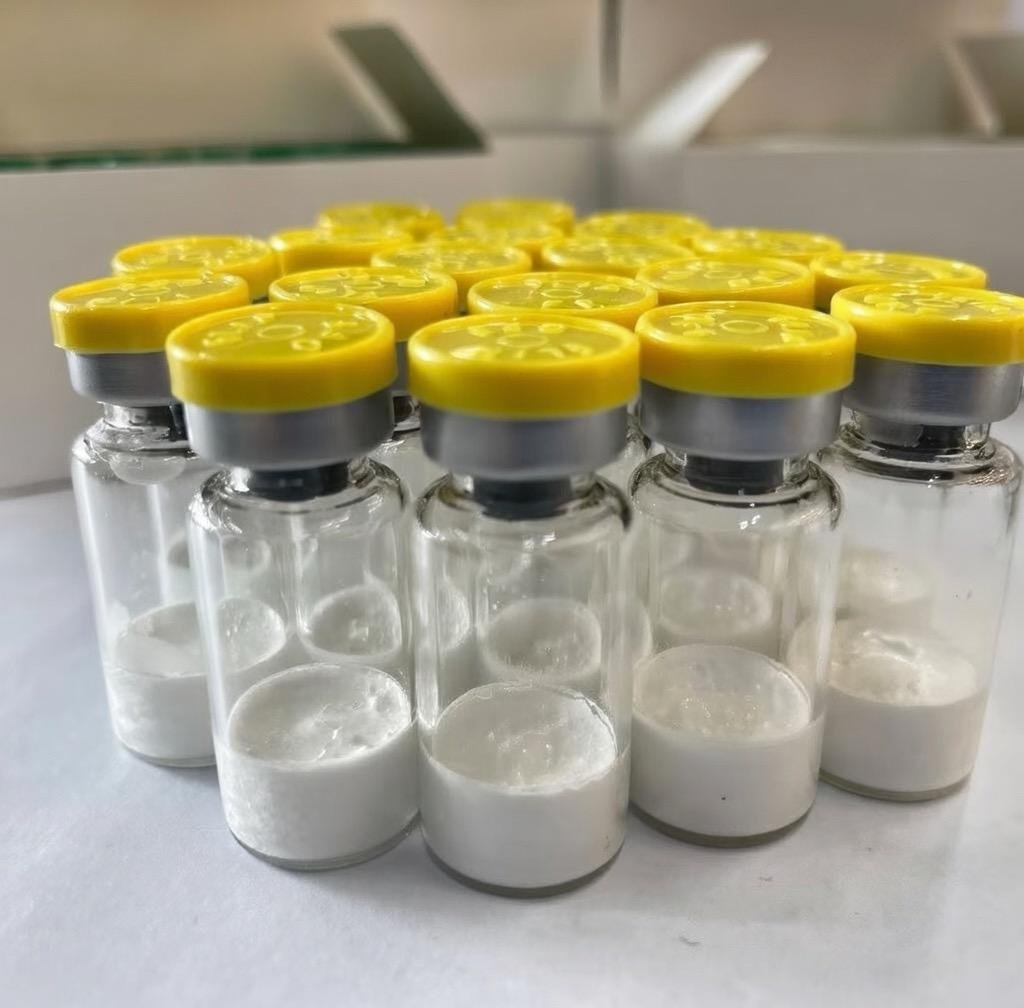
| Appearance | White to off‑white lyophilised powder |
| Solubility | Soluble in sterile water and sterile PBS (pH 5‑7) |
| Storage (Lyophilised) | –20°C, sealed, protected from light; stable for up to 2 years |
| Storage (Reconstituted) | 2‑8°C for short‑term use; single‑use aliquots at –20°C for long‑term storage |
Note: The 5 mg mass refers to the weight of the peptide in its lyophilised form. LL‑37 is typically supplied as a TFA or acetate salt. The peptide should be stored protected from moisture and light, preferably under nitrogen for long‑term storage.
Reconstitution & Handling Protocol for LL‑37 (5mg)
Proper reconstitution of LL-37 (5mg) research peptide is critical for maintaining its structural integrity and biological activity. LL‑37 is susceptible to proteolytic degradation, so careful handling is essential.
Step 1 – Preparation
-
Bring the sealed LL‑37 vial and your chosen diluent (sterile bacteriostatic water or sterile PBS, pH 5‑7) to room temperature. Condensation can degrade the lyophilised powder.
-
Clean your work surface with 70% ethanol and lay out sterile syringes, alcohol wipes and a clean work mat.
Step 2 – Vial Sanitisation
-
Wipe the rubber stopper of the LL‑37 vial with a fresh 70% ethanol wipe. Allow the alcohol to evaporate completely before piercing.
Step 3 – Reconstitution
-
Draw your desired volume of diluent into a sterile syringe. A common starting concentration for research applications is 5 mg per 0.5 mL of diluent, yielding a 10 mg/mL stock solution.
-
Insert the needle and slowly inject the diluent against the inner glass wall. Do not spray directly onto the lyophilised powder.
-
Gently swirl the vial until the solution is clear and fully dissolved. Do not shake vigorously, as shaking can cause denaturation.
Step 4 – Aliquoting & Storage
-
Immediately after dissolution, aliquot the reconstituted LL‑37 into single‑use sterile vials.
-
Store aliquots at –20°C. Avoid repeated freeze‑thaw cycles, as peptides are susceptible to degradation.
-
Once thawed, store at 2‑8°C and use within a short period.
Concentration Reference Table for LL-37 (5mg)
| Vial Mass | Diluent Volume | Final Concentration |
|---|---|---|
| 5 mg | 0.5 mL | 10 mg/mL |
| 5 mg | 1.0 mL | 5 mg/mL |
| 5 mg | 2.5 mL | 2 mg/mL |
Adjust diluent volume based on your experimental requirements. For cell culture applications, typical working concentrations range from 1‑10 µM, though higher concentrations (up to 300 µM) have been reported in some research models.
Storage & Stability Guidelines for LL-37 (5mg)
| Storage Condition | Shelf Life | Notes |
|---|---|---|
| Lyophilised at –20°C, unopened | 2 years | Use desiccant, protect from light and moisture |
| Lyophilised at 2‑8°C, unopened | 6‑12 months | –20°C storage is strongly preferred for long‑term stability |
| Reconstituted at 2‑8°C | Short‑term use | Use within days to weeks |
| Reconstituted aliquots at –20°C | Up to 3 months | Single freeze only; discard after thawing |
| Reconstituted aliquots at –80°C | Up to 6 months | Recommended for long‑term storage |
Why Choose Wuhan Top Miracle Peptides for LL‑37 (5mg)?
As an authentic licensed peptide supplier based in the United Kingdom, we supply LL-37 (5mg) research peptide and a wide range of research‑grade compounds under rigorous quality assurance protocols, fully aligned with Google’s E‑E‑A‑T standards (Experience, Expertise, Authoritativeness, Trustworthiness).
-
Verified Purity: Independent HPLC analysis with purity guaranteed ≥98% for every batch.
-
GMP‑Compliant Manufacturing: All peptides are synthesised under strict quality control conditions.
-
Full Traceability: Batch‑specific Certificates of Analysis (COA) are available for every order.
-
Wholesale Supply: We serve research institutions, laboratories, and wholesale buyers across the UK, EU, and USA with flexible volume pricing and reliable logistics.
-
UK‑Based Regulatory Compliance: All products are supplied strictly as research‑grade chemicals for laboratory use only (RUO).
Researchers across the United Kingdom—including those at leading institutions in London, Cambridge, Oxford, Manchester, and Edinburgh—trust us for fast domestic delivery, transparent documentation and professional technical support.
FAQ: LL‑37 (5mg) Research Peptide
What is LL‑37 (5mg) research peptide?
LL‑37 is a 37‑amino‑acid cationic antimicrobial peptide and the sole member of the human cathelicidin family. It is derived from the C‑terminal end of the hCAP‑18 proteinand exhibits broad‑spectrum antimicrobial, immunomodulatory, and wound‑healing activities.
What is the sequence and molecular weight of LL‑37?
The sequence is LLGDFFRKSKEKIGKEFKRIVQRIKDFLRNLVPRTES. Its molecular weight is approximately 4493 Da.
What are the primary research applications for LL‑37?
LL‑37 is used in antimicrobial and infectious disease research (including drug‑resistant strains), immunology and inflammation research, wound healing and tissue repair studies, and cancer and amyloid research.
What is the mechanism of action of LL‑37?
LL‑37 acts through multiple mechanisms: direct membrane disruption of microbes, immunomodulation via endotoxin neutralisation and cytokine modulation, and promotion of angiogenesis, cell migration, and proliferation.
What purity does your LL‑37 (5mg) meet?
Our LL‑37 is tested to ≥98% purity by HPLC. A Certificate of Analysis (COA) is supplied with every order.
How should I reconstitute LL‑37 (5mg)?
Reconstitute with sterile bacteriostatic water or sterile PBS (pH 5‑7). Allow the vial to reach room temperature, then slowly inject the diluent against the inner glass wall and swirl gently. Do not shake.
How should I store reconstituted LL‑37?
Reconstituted LL‑37 should be stored at 2‑8°C for short‑term use. For longer storage, aliquot immediately into single‑use vials and store at –20°C for up to 3 months or at –80°C for up to 6 months. Avoid repeated freeze‑thaw cycles.
Is LL‑37 research peptide legal to purchase in the UK?
Yes. LL‑37 is a laboratory reagent sold for research use only (RUO). It is fully legal to purchase, possess, and use in the United Kingdom for legitimate in‑vitro or in‑vivo scientific research, provided it is not marketed with therapeutic claims.
Does Wuhan Top Miracle Peptides ship internationally?
Yes. We ship across the EU (France, Germany, Spain, Sweden, Italy) and to the USA from our UK warehouse. Wholesale pricing is available for bulk orders.
Wholesale LL-37 5mg Supply Across the UK and Europe
Wuhan Top Miracle Peptides supports wholesale peptide buyers in the United Kingdom and international markets.
We Support Enquiries From:
- United Kingdom
- France
- Germany
- Spain
- Sweden
- Italy
- USA
- Wider Europe
For larger LL-37 5mg enquiries, contact our team before ordering. This helps confirm stock, documentation, shipping options, product identity, and buyer verification requirements.
Where to Source LL-37 5mg in the UK
If you are searching for where to source LL-37 (5mg) in the UK, Wuhan Top Miracle Peptides provides a simple professional enquiry process.
Professional Enquiry Process
- Review the LL-37 (5mg) product details.
- Check the current label and batch information.
- Confirm whether the batch is listed as LL-37, LL37, cathelicidin peptide, CAMP peptide, or another verified identity.
- Ask about COA and purity-related documentation.
- Confirm the sequence and salt form where required.
- Confirm your shipping country.
- Discuss wholesale quantity requirements.
- Complete buyer verification where required.
- Place a professional enquiry with support from our team.
Bulk Peptides Page
Shipping & Returns Page
Contact Us Page
Shop Page
Quality / Compliance Page
NCBI Gene / CAMP reference
Scientific or peer-reviewed reference source
GOV.UK / MHRA
Google Search Central
ASA / CAP Code Section 12
From its discovery as the sole human cathelicidin to its well‑characterised role as a multifunctional host defense peptide, LL-37 (5mg) research peptide provides a precisely defined and increasingly valuable platform for advanced antimicrobial and immunology research. Its ability to combat over 38 bacteria, 16 fungi, and 16 viruses, modulate innate immunity, and promote wound healing—supported by a growing body of peer‑reviewed literature published in ScienceDirect, PubMed, and other authoritative journals—makes it a valuable addition to any laboratory investigating host‑pathogen interactions, innate immunity, or tissue repair. By choosing high‑purity, lab‑verified LL-37 (5mg) research peptide from Wuhan Top Miracle Peptides, you ensure that your research is built on a foundation of quality, reproducibility, and scientific integrity.
Ready to advance your research with LL‑37 (5mg)? Browse our product catalogue, request a wholesale quote, or contact our support team today to discuss your laboratory’s specific needs. Place your order now and receive GMP‑grade LL‑37 delivered directly to your facility in the UK, EU, or USA.
Be the first to review “LL-37 (5mg)”
Related products
Peptides
Reviews
There are no reviews yet.