
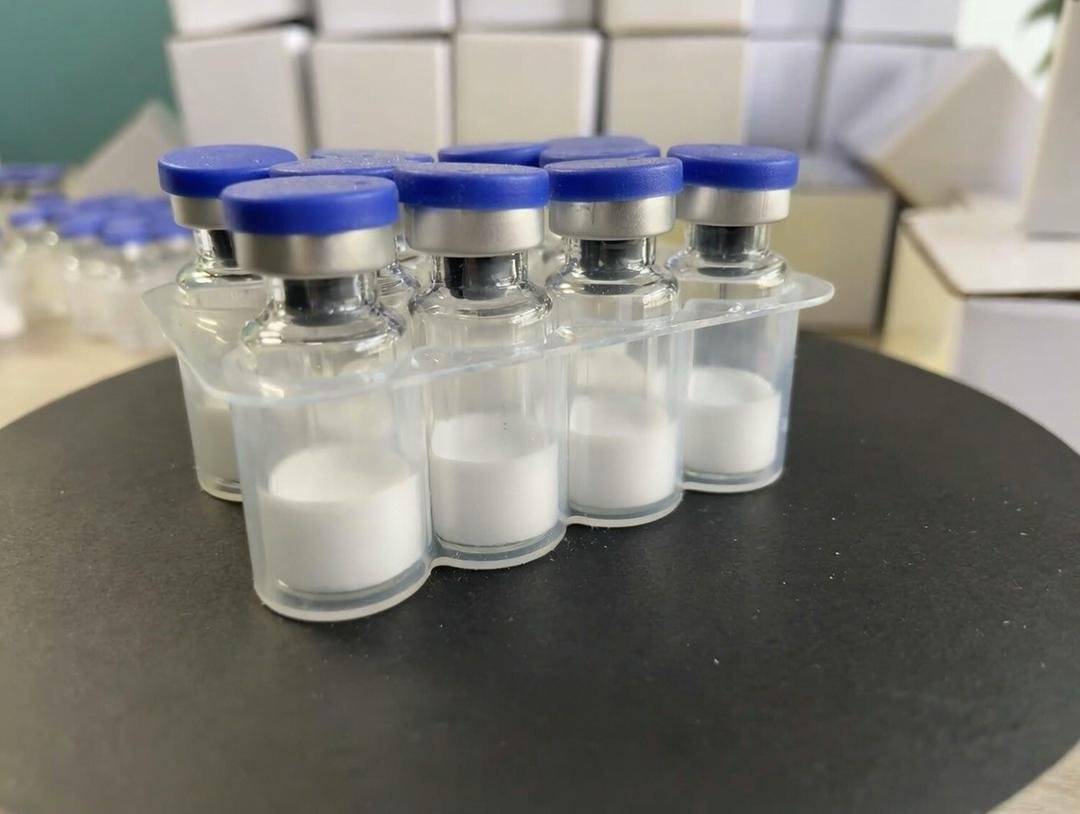

Matrixyl (200mg) Research Peptide: A Matrikine Signalling Peptide for Fibroblast & ECM Studies
If your research investigates fibroblast biology, extracellular matrix (ECM) dynamics, or the molecular mechanisms of collagen synthesis and tissue repair, Matrixyl (200mg) research peptide offers a precisely defined and extensively characterised synthetic tool. Matrixyl (palmitoyl pentapeptide-4, Pal‑KTTKS) is a small, highly specific bioactive lipopeptide consisting of five amino acid residues—lysine, threonine, threonine, lysine, and serine—linked to a palmitoyl (C16 fatty acid) group.
This peptide fragment (KTTKS) is a snippet of type I collagen’s propeptide, and the palmitic acid tail enhances its lipophilicity and ability to interact with lipid bilayers. As a matrikine—a signalling molecule derived from ECM proteins—Matrixyl mimics the natural collagen fragments produced during tissue remodelling, providing feedback to fibroblasts to stimulate the production of new collagen. This makes Matrixyl (200mg) research peptide a valuable tool for laboratories investigating connective tissue biology, wound healing, and the regulation of the extracellular matrix.
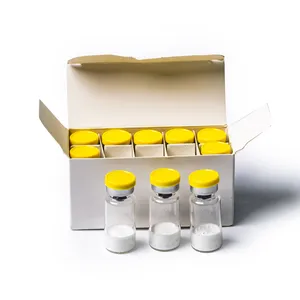
At Wuhan Top Miracle Peptides, we supply high‑purity Matrixyl (200mg) research peptide to research institutions and wholesale buyers across the United Kingdom, France, Germany, Spain, Sweden, Italy, and the USA. Every batch is lyophilised, HPLC‑verified to ≥98% purity, and accompanied by a Certificate of Analysis (COA), ensuring your investigations into fibroblast signalling, collagen synthesis, and ECM remodelling begin with uncompromising quality.
What Is Matrixyl and How Does It Work?
To fully appreciate the research potential of Matrixyl (200mg) research peptide, it is essential to understand its biochemical design and the mechanisms by which it exerts its effects on fibroblasts and the extracellular matrix.
The Pal‑KTTKS Pentapeptide
Matrixyl is a synthetic lipopeptide with the sequence Pal‑Lys‑Thr‑Thr‑Lys‑Ser‑OH (Pal‑KTTKS). Its molecular formula is C₃₉H₇₅N₇O₁₀, and its molecular weight is approximately 802.05 Da. It has a CAS number of 214047‑00‑4.
The peptide consists of a five‑amino‑acid sequence (KTTKS) derived from type I collagen, conjugated to a palmitoyl (C16 fatty acid) chain. The KTTKS sequence is a matrikine—a bioactive fragment that signals fibroblasts to produce new collagen. The palmitoyl group enhances lipophilicity and membrane affinity, allowing the peptide to penetrate lipid bilayers and interact with cellular targets. Matrixyl was launched in 2000 as an active ingredient for the personal care industry under the trade name Matrixyl by Sederma SAS.
Mechanism of Action: Matrikine Signalling and Fibroblast Activation
The biological activity of Matrixyl (200mg) research peptide is mediated through its function as a matrikine that activates fibroblast‑mediated ECM production:
-
Matrikine Signalling: Matrixyl functions as a matrikine—a peptide fragment derived from ECM proteins that acts as a signalling molecule to modulate cellular behaviour. By mimicking collagen fragments, it provides feedback modulation of connective tissue remodelling and proliferative cellular processes.
-
Fibroblast Activation: The peptide signals fibroblasts to synthesise new ECM components. In 2013, Hamley and colleagues reported that Matrixyl stimulates collagen production in human skin and corneal cells in a concentration‑dependent manner.
-
Collagen Synthesis: Matrixyl stimulates the production of elastin, fibronectin, and collagen, especially types I, III, and IV. It promotes ECM support and wound healing.
-
Concentration‑Dependent Activity: The collagen‑stimulating effect of C16‑KTTKS has been shown to occur in a concentration‑dependent manner close to the critical aggregation concentration.
Research Note: A Well‑Studied Peptide with Clinical Validation
Matrixyl is one of the most‑studied cosmetic peptides. A double‑blind, randomized trial comparing palmitoyl pentapeptide‑4 (Matrixyl) with acetylhexapeptide‑3 (Argireline) for crow’s feet found that Matrixyl demonstrated better results compared to both Argireline and placebo.
Key Research Applications for Matrixyl (200mg)
Matrixyl (200mg) research peptide is a versatile tool with applications spanning several domains of biomedical research.
1. Fibroblast Biology and ECM Research
The most established application of Matrixyl lies in its ability to serve as a molecular probe for studying fibroblast function and ECM dynamics. Research applications include:
-
Collagen Synthesis Studies: Investigating the signalling pathways by which Matrixyl stimulates the production of collagen types I, III, and IV in dermal fibroblasts.
-
Fibroblast Activation: Studying how Matrixyl activates fibroblasts to synthesise ECM components and the role of matrikine signalling in tissue homeostasis.
-
ECM Remodelling: Exploring the balance between ECM synthesis and degradation in models of tissue repair and fibrosis.
-
Concentration‑Dependent Studies: Investigating the relationship between Matrixyl concentration and collagen production.
2. Wound Healing and Tissue Repair Research
Matrixyl has been studied for its wound‑healing properties. Research applications include:
-
Wound Healing Models: Investigating the contribution of Matrixyl to collagen formation during wound healing.
-
Delivery Systems: Studying how the mode of delivery affects Matrixyl’s efficacy in wound healing.
-
Infected Wound Models: Research has explored Matrixyl derivatives as leads for topical treatment of severely infected skin injuries.
3. Formulation and Delivery System Research
The amphiphilic structure of Matrixyl makes it a useful tool for studying peptide delivery systems:
-
Dendrimer‑Based Delivery: Studies have used PAMAM dendrimers functionalised with palmitoyl pentapeptide‑4 for controlled release of active therapeutics into the dermis for 24 hours.
-
Solubility Enhancement: Research has investigated how GAO (a solubility enhancer) can improve the sparingly soluble properties of palmitoyl pentapeptide‑4.
-
Topical Formulation Studies: Investigating the stability and bioavailability of Matrixyl in various formulation contexts.
4. Comparative Peptide Studies
As a well‑characterised reference compound, Matrixyl serves as a standard for:
-
Comparative Efficacy Studies: Comparing Matrixyl with other collagen‑stimulating peptides.
-
Structure‑Activity Relationship (SAR) Studies: Investigating how modifications to the KTTKS sequence affect biological activity.
-
Mechanistic Studies: Using Matrixyl as a reference to elucidate the mechanisms of other matrikines.
Chemical & Physical Specifications
Accurate characterisation of Matrixyl (200mg) research peptide is essential for reproducible experimental design.
| Parameter | Specification |
|---|---|
| Common Names | Matrixyl, Palmitoyl Pentapeptide‑4, Pal‑KTTKS |
| Amino Acid Sequence (One‑Letter) | Pal‑KTTKS |
| Amino Acid Sequence (Three‑Letter) | Pal‑Lys‑Thr‑Thr‑Lys‑Ser‑OH |
| Molecular Formula | C₃₉H₇₅N₇O₁₀ |
| Molecular Weight | ~802.05 Da |
| CAS Number | 214047‑00‑4 |
| Purity | ≥98% (HPLC verified) |
| Appearance | White to off‑white lyophilised powder |
| Solubility | Soluble in water, ethanol, and DMSO |
| Storage (Lyophilised) | –20°C, sealed, protected from light; stable for up to 2 years |
| Storage (Reconstituted) | 2‑8°C for short‑term use; single‑use aliquots at –20°C for long‑term storage |
Note: The 200 mg mass refers to the weight of the peptide in its lyophilised form. Matrixyl is typically supplied as a TFA or acetate salt, which enhances aqueous solubility. The KTTKS peptide fragment alone has a molecular weight of 563.64 Da.
Reconstitution & Handling Protocol for Matrixyl (200mg)
Proper reconstitution of Matrixyl (200mg) research peptide is critical for maintaining its structural integrity and biological activity.
Step 1 – Preparation
-
Bring the sealed Matrixyl vial and your chosen diluent (sterile bacteriostatic water, sterile PBS pH 5‑7, or ethanol) to room temperature. Condensation can degrade the lyophilised powder.
-
Clean your work surface with 70% ethanol and lay out sterile syringes, alcohol wipes and a clean work mat.
Step 2 – Vial Sanitisation
-
Wipe the rubber stopper of the Matrixyl vial with a fresh 70% ethanol wipe. Allow the alcohol to evaporate completely before piercing.
Step 3 – Reconstitution
-
Draw your desired volume of diluent into a sterile syringe. A common starting concentration for research applications is 200 mg per 20 mL of diluent, yielding a 10 mg/mL stock solution.
-
Insert the needle and slowly inject the diluent against the inner glass wall. Do not spray directly onto the lyophilised powder.
-
Gently swirl the vial until the solution is clear and fully dissolved. Do not shake vigorously, as shaking can cause denaturation.
Step 4 – Aliquoting & Storage
-
Immediately after dissolution, aliquot the reconstituted Matrixyl into single‑use sterile vials.
-
Store aliquots at –20°C. Avoid repeated freeze‑thaw cycles, as peptides are susceptible to degradation.
-
Once thawed, store at 2‑8°C and use within a short period.
Concentration Reference Table
| Vial Mass | Diluent Volume | Final Concentration |
|---|---|---|
| 200 mg | 20 mL | 10 mg/mL |
| 200 mg | 10 mL | 20 mg/mL |
| 200 mg | 40 mL | 5 mg/mL |
Adjust diluent volume based on your experimental requirements. For cell culture applications, typical working concentrations range from 0.1‑10 µM.
Storage & Stability Guidelines
| Storage Condition | Shelf Life | Notes |
|---|---|---|
| Lyophilised at –20°C, unopened | 2 years | Use desiccant, protect from light |
| Lyophilised at 2‑8°C, unopened | 6‑12 months | –20°C storage is strongly preferred for long‑term stability |
| Reconstituted at 2‑8°C | Short‑term use | Use within days to weeks |
| Reconstituted aliquots at –20°C | Up to 3 months | Single freeze only; discard after thawing |
Why Choose Wuhan Top Miracle Peptides for Matrixyl (200mg)?
As an authentic licensed peptide supplier based in the United Kingdom, we supply Matrixyl (200mg) research peptide and a wide range of research‑grade compounds under rigorous quality assurance protocols, fully aligned with Google’s E‑E‑A‑T standards (Experience, Expertise, Authoritativeness, Trustworthiness).
-
Verified Purity: Independent HPLC analysis with purity guaranteed ≥98% for every batch.
-
GMP‑Compliant Manufacturing: All peptides are synthesised under strict quality control conditions.
-
Full Traceability: Batch‑specific Certificates of Analysis (COA) are available for every order.
-
Wholesale Supply: We serve research institutions, laboratories, and wholesale buyers across the UK, EU, and USA with flexible volume pricing and reliable logistics.
-
UK‑Based Regulatory Compliance: All products are supplied strictly as research‑grade chemicals for laboratory use only (RUO).
Researchers across the United Kingdom—including those at leading institutions in London, Cambridge, Oxford, Manchester, and Edinburgh—trust us for fast domestic delivery, transparent documentation and professional technical support.
FAQ: Matrixyl (200mg) Research Peptide
What is Matrixyl (200mg) research peptide?
Matrixyl (palmitoyl pentapeptide‑4, Pal‑KTTKS) is a synthetic lipopeptide consisting of a five‑amino‑acid sequence (KTTKS) derived from type I collagen, conjugated to a palmitoyl (C16 fatty acid) chain. It is used in research to study fibroblast activation, collagen synthesis, and ECM dynamics.
What is the sequence and molecular weight of Matrixyl?
The sequence is Pal‑Lys‑Thr‑Thr‑Lys‑Ser‑OH (Pal‑KTTKS). Its molecular formula is C₃₉H₇₅N₇O₁₀, and its molecular weight is approximately 802.05 Da.
What are the primary research applications for Matrixyl?
Matrixyl is used in fibroblast biology and ECM research (collagen synthesis, fibroblast activation), wound healing and tissue repair studies, formulation and delivery system research, and comparative peptide studies.
What is the mechanism of action of Matrixyl?
Matrixyl functions as a matrikine—a signalling peptide that mimics collagen fragments. It activates fibroblasts to synthesise new ECM components, including collagen types I, III, and IV, elastin, and fibronectin, in a concentration‑dependent manner.
What purity does your Matrixyl (200mg) meet?
Our Matrixyl is tested to ≥98% purity by HPLC. A Certificate of Analysis (COA) is supplied with every order.
How should I reconstitute Matrixyl (200mg)?
Reconstitute with sterile bacteriostatic water, sterile PBS (pH 5‑7), or ethanol. Allow the vial to reach room temperature, then slowly inject the diluent against the inner glass wall and swirl gently. Do not shake. A typical starting concentration is 10 mg/mL.
How should I store reconstituted Matrixyl?
Reconstituted Matrixyl should be stored at 2‑8°C for short‑term use. For longer storage, aliquot immediately into single‑use vials and store at –20°C for up to 3 months. Avoid repeated freeze‑thaw cycles.
Is Matrixyl research peptide legal to purchase in the UK?
Yes. Matrixyl is a laboratory reagent sold for research use only (RUO). It is fully legal to purchase, possess, and use in the United Kingdom for legitimate in‑vitro or in‑vivo scientific research, provided it is not marketed with therapeutic claims.
Does Wuhan Top Miracle Peptides ship internationally?
Yes. We ship across the EU (France, Germany, Spain, Sweden, Italy) and to the USA from our UK warehouse. Wholesale pricing is available for bulk orders.
Wholesale Matrixyl 200mg Supply Across the UK and Europe
Wuhan Top Miracle Peptides supports wholesale peptide and cosmetic ingredient buyers in the United Kingdom and international markets.
We Support Enquiries From:
- United Kingdom
- France
- Germany
- Spain
- Sweden
- Italy
- USA
- Wider Europe
For larger Matrixyl 200mg enquiries, contact our team before ordering. This helps confirm stock, wholesale pricing, documentation, shipping options, and buyer requirements.
Where to Buy Matrixyl 200mg in the UK
If you are searching for where to buy Matrixyl 200mg in the UK, Wuhan Top Miracle Peptides provides a simple research-focused enquiry process.
How to Order
- Review the Matrixyl 200mg product details.
- Check the current label and batch information.
- Confirm the INCI name or product identity from documentation.
- Ask whether Palmitoyl Pentapeptide-4 is confirmed on the COA.
- Ask about purity-related documentation.
- Confirm your shipping country.
- Discuss wholesale quantity requirements.
- Place your enquiry with support from our team.
Bulk Peptides Page
Shipping & Returns Page
Contact Us Page
Shop Page
Quality / Compliance Page
PubChem
Google Search Central
GOV.UK / MHRA
ASA / CAP Code Section 12
Scientific or ingredient reference source such as PubMed, NCBI, CosIng, or an official cosmetic ingredient database
From its design as a palmitoylated matrikine derived from type I collagen to its well‑characterised role in activating fibroblasts and stimulating the production of collagen types I, III, and IV, Matrixyl (200mg) research peptide provides a precisely defined and extensively studied platform for advanced fibroblast and ECM research.
Its ability to signal fibroblasts to synthesise new extracellular matrix components—supported by peer‑reviewed studies published in PubMed and clinical trials demonstrating efficacy—makes it a valuable addition to any laboratory investigating connective tissue biology, wound healing, or the regulation of the extracellular matrix. By choosing high‑purity, lab‑verified Matrixyl (200mg) research peptide from Wuhan Top Miracle Peptides, you ensure that your research is built on a foundation of quality, reproducibility, and scientific integrity.
Ready to advance your research with Matrixyl (200mg)? Browse our product catalogue, request a wholesale quote, or contact our support team today to discuss your laboratory’s specific needs. Place your order now and receive GMP‑grade Matrixyl delivered directly to your facility in the UK, EU, or USA.
Be the first to review “Matrixyl (200mg)”
Related products

Peptides
Reviews
There are no reviews yet.