

P21 Research Peptide: A Dual‑Action Tool for Neurodegeneration & Cell Cycle Studies
If your research investigates neurodegenerative disease, neurogenesis, or the molecular mechanisms of cell cycle regulation, P21 research peptide represents a precisely defined synthetic tool with growing scientific interest. Also known as P021, this small tetra‑peptide (Ac‑DGGL(A)G‑NH₂) is derived from the most active region of ciliary neurotrophic factor (CNTF)—a potent neurotrophic factor that promotes neuronal survival and differentiation. Unlike full‑length CNTF, which is too large to cross the blood‑brain barrier and has poor plasma stability, P21 is small enough to penetrate the central nervous system while retaining neurotrophic activity. Its unique design also allows it to mimic the functional domains of the cyclin‑dependent kinase inhibitor p21, making it a valuable tool for studying both neurotrophic signalling and cell cycle dynamics.
At Wuhan Top Miracle Peptides, we supply high‑purity P21 research peptide to research institutions and wholesale buyers across the United Kingdom, France, Germany, Spain, Sweden, Italy, and the USA. Every batch is lyophilised, HPLC‑verified to ≥98% purity, and accompanied by a Certificate of Analysis (COA), ensuring your investigations into neurodegeneration, neurogenesis, and cell cycle regulation begin with uncompromising quality.
What Is P21 and How Does It Work?
To fully appreciate the research potential of P21 research peptide, it is essential to understand its biochemical design and the dual mechanisms by which it exerts its effects.
The Ac‑DGGL(A)G‑NH₂ Tetra‑Peptide
P21 is a synthetic tetra‑peptide (in some formulations, a pentapeptide when the C‑terminal adamantane group is counted) with the sequence Ac‑Asp‑Gly‑Gly‑Leu‑(A)G‑NH₂, where (A) represents an adamantane group. Its molecular formula is C₂₇H₄₂N₆O₈ (or C₃₀H₅₄N₆O₅), and its molecular weight is approximately 578.67 g/mol. It has a CAS number of 1246751‑68‑7. The N‑terminal acetylation and C‑terminal amidation enhance the peptide’s stability. The incorporation of an adamantane group at the C‑terminus is a key structural feature—it enhances the peptide’s stability and improves its ability to cross the blood‑brain barrier.
Mechanism of Action: Dual Neurotrophic and Cell Cycle Pathways
The biological activity of P21 research peptide is rooted in its ability to act as a CNTF mimetic and a modulator of cell cycle regulation.
CNTF Mimetic and Neurotrophic Signalling:
-
BDNF/TrkB Pathway Activation: P21 activates the BDNF‑TrkB‑PI3K‑AKT‑GSK3β signalling pathway, a cascade critical for neuronal survival, synaptic plasticity, and neurogenesis.
-
Neuroprotection and Neurogenesis: In laboratory animal studies, P21 has been reported to increase levels of brain‑derived neurotrophic factor (BDNF), thus promoting neurogenesis (nerve growth) and inhibiting the formation of amyloid plaques and tau proteins seen in Alzheimer’s disease.
-
Tau and Amyloid Pathology: P21 has been shown to attenuate robustly tau and mildly Aβ pathologies in 3xTg‑AD mouse models.
-
LIF Pathway Modulation: P21 competitively inhibits the leukemia inhibitory factor (LIF) signalling pathway, which is known to inhibit the formation of neural progenitor cells from stem cells.
Cell Cycle Regulation and CDK Inhibition:
-
CDK‑Cyclin Complex Inhibition: P21 mimics the functional domains of endogenous p21, allowing it to inhibit cyclin‑dependent kinase (CDK) activity in vitro, thereby facilitating the study of G1/S and G2/M phase transitions.
-
PCNA Interaction: P21 also interacts with proliferating cell nuclear antigen (PCNA), a key regulator of DNA replication and repair.
Key Research Applications for P21
P21 research peptide is a versatile tool with applications spanning several domains of biomedical research.
Neurodegenerative Disease & Alzheimer’s Research
The most extensively studied application of P21 lies in its potential as a disease‑modifying agent for neurodegenerative conditions. Research has demonstrated:
-
Amyloid and Tau Pathology Reduction: P21 attenuated robustly tau and mildly Aβ pathologies in 3xTg‑AD mice.
-
Rescue of Cognitive Deficits: P21 could rescue deficits in neurogenesis, neuronal plasticity, and cognition.
-
Disease‑Modifying Potential: P21 is considered a potential disease‑modifying treatment for Alzheimer’s disease.
In a landmark study, P021 treatment was able to rescue dendritic and synaptic deficits, boost neurogenesis, and reverse cognitive impairment in 3 × Tg‑AD mice.
Neurogenesis & Neuronal Plasticity Research
P21’s ability to increase BDNF levels positions it as a valuable tool for studying:
-
Adult Neurogenesis: The mechanisms underlying the generation of new neurons in the adult brain.
-
Synaptic Plasticity: The molecular pathways involved in learning and memory formation.
-
Neuronal Survival: The signalling cascades that promote neuronal survival and differentiation.
Cell Cycle & Proliferation Studies
P21 serves as a functional probe for dissecting cell cycle control mechanisms:
-
CDK Inhibition Studies: Investigating how p21‑mediated inhibition of CDK‑cyclin complexes contributes to cell cycle arrest in response to DNA damage or oncogenic stress.
-
G1/S and G2/M Phase Transitions: Studying the regulatory checkpoints that control cell cycle progression.
-
Tumour Suppressor Pathways: Elucidating the role of p21 in tumour suppression and cellular stress responses.
Protein‑Protein Interaction Mapping
The peptide serves as a valuable probe for investigating molecular interactions:
-
p21‑CDK Interactions: Characterising the affinity and specificity of p21 interactions with cyclin‑dependent kinases.
-
p21‑PCNA Interactions: Mapping critical contact residues and exploring the structural determinants of these complexes.
Drug Discovery & Peptide‑Based Screening
In drug discovery and chemical biology, P21 provides a functional template for:
-
High‑Throughput Assays: Evaluating the efficacy of candidate compounds in disrupting or enhancing p21‑CDK protein‑protein interactions.
-
Inhibitor Design: Developing small‑molecule inhibitors or mimetics targeting the p21‑CDK interface.
Chemical & Physical Specifications
Accurate characterisation of P21 research peptide is essential for reproducible experimental design.
| Parameter | Specification |
|---|---|
| Common Names | P21, P021, Peptide 021 |
| Amino Acid Sequence (One‑Letter) | Ac‑DGGL(A)G‑NH₂ |
| Amino Acid Sequence (Three‑Letter) | Ac‑Asp‑Gly‑Gly‑Leu‑(A)Gly‑NH₂ |
| Molecular Formula | C₂₇H₄₂N₆O₈ |
| Molecular Weight | ~578.67 g/mol |
| CAS Number | 1246751‑68‑7 |
| Purity | ≥98% (HPLC verified) |
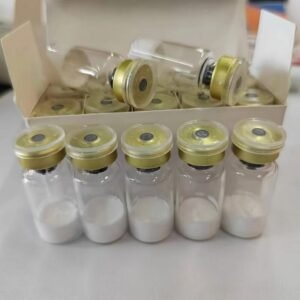
| Appearance | White powder |
| Solubility | Soluble in sterile water and sterile PBS (pH 5‑7) |
| Storage (Lyophilised) | –20°C, sealed, protected from light; stable for up to 2 years |
| Storage (Reconstituted) | 2‑8°C for up to 28 days; single‑use aliquots at –20°C for up to 3 months |
Note: The adamantane group ((A) in the sequence) is a bulky hydrophobic moiety that enhances peptide stability and blood‑brain barrier penetration.
Reconstitution & Handling Protocol for P21
Proper reconstitution of P21 research peptide is critical for maintaining its structural integrity and biological activity.
Step 1 – Preparation
-
Bring the sealed P21 vial and your chosen diluent (sterile bacteriostatic water or sterile PBS, pH 5‑7) to room temperature. Condensation can degrade the lyophilised powder.
-
Clean your work surface with 70% ethanol and lay out sterile syringes, alcohol wipes and a clean work mat.
Step 2 – Vial Sanitisation
-
Wipe the rubber stopper of the P21 vial with a fresh 70% ethanol wipe. Allow the alcohol to evaporate completely before piercing.
Step 3 – Reconstitution
-
Draw your desired volume of diluent into a sterile syringe. A typical starting concentration for research applications is 1 mg per 1 mL of diluent, yielding a 1 mg/mL stock solution.
-
Insert the needle and slowly inject the diluent against the inner glass wall. Do not spray directly onto the lyophilised powder.
-
Gently swirl the vial until the solution is clear and fully dissolved. Do not shake vigorously, as shaking can cause denaturation.
Step 4 – Aliquoting & Storage
-
Immediately after dissolution, aliquot the reconstituted P21 into single‑use sterile vials.
-
Store aliquots at –20°C. Avoid repeated freeze‑thaw cycles.
-
Once thawed, store at 2‑8°C and use within a short period.
Concentration Reference Table
| Vial Mass | Diluent Volume | Final Concentration |
|---|---|---|
| 1 mg | 1.0 mL | 1 mg/mL |
| 5 mg | 5.0 mL | 1 mg/mL |
| 10 mg | 10.0 mL | 1 mg/mL |
Adjust diluent volume based on your experimental requirements. For cell culture applications, further dilute to working concentrations (typically 10‑100 µM).
Storage & Stability Guidelines
| Storage Condition | Shelf Life | Notes |
|---|---|---|
| Lyophilised at –20°C, unopened | 2 years | Use desiccant, protect from light. |
| Lyophilised at 2‑8°C, unopened | 6‑12 months | –20°C storage is strongly preferred for long‑term stability. |
| Reconstituted at 2‑8°C | Short‑term use | Use within days to weeks. |
| Reconstituted aliquots at –20°C | Up to 3 months | Single freeze only; discard after thawing. |
Why Choose Wuhan Top Miracle Peptides for P21?
As an authentic licensed peptide supplier based in the United Kingdom, we supply P21 research peptide and a wide range of research‑grade compounds under rigorous quality assurance protocols, fully aligned with Google’s E‑E‑A‑T standards (Experience, Expertise, Authoritativeness, Trustworthiness).
-
Verified Purity: Independent HPLC analysis with purity guaranteed ≥98% for every batch.
-
GMP‑Compliant Manufacturing: All peptides are synthesised in ISO 13485:2016 and GMP‑certified facilities, ensuring batch‑to‑batch consistency.
-
Full Traceability: Batch‑specific Certificates of Analysis (COA) are available for every order.
-
Wholesale Supply: We serve research institutions, laboratories, and wholesale buyers across the UK, EU, and USA with flexible volume pricing and reliable logistics.
-
UK‑Based Regulatory Compliance: All products are supplied strictly as research‑grade chemicals for laboratory use only (RUO).
Researchers across the United Kingdom—including those at leading institutions in London, Cambridge, Oxford, Manchester, and Edinburgh—trust us for fast domestic delivery, transparent documentation and professional technical support.
FAQ: P21 Research Peptide
What is P21 research peptide?
P21 (also known as P021) is a synthetic tetra‑peptide (Ac‑DGGL(A)G‑NH₂) derived from the active region of ciliary neurotrophic factor (CNTF). It acts as a CNTF mimetic and a modulator of cell cycle regulation, making it a valuable tool for neurodegeneration, neurogenesis, and cell cycle research.
What is the sequence and molecular weight of P21?
The sequence is Ac‑Asp‑Gly‑Gly‑Leu‑(A)Gly‑NH₂ (Ac‑DGGL(A)G‑NH₂). Its molecular weight is approximately 578.67 g/mol.
What are the primary research applications for P21?
P21 is used in neurodegenerative disease and Alzheimer’s research, neurogenesis and neuronal plasticity studies, cell cycle and proliferation studies, protein‑protein interaction mapping, and drug discovery and peptide‑based screening.
What is the mechanism of action of P21?
P21 acts through dual pathways: as a CNTF mimetic, it activates the BDNF‑TrkB‑PI3K‑AKT‑GSK3β pathway, promoting neuroprotection and neurogenesis. As a CDK inhibitor, it modulates cell cycle progression by inhibiting CDK‑cyclin complexes.
What purity does your P21 research peptide meet?
Our P21 is tested to ≥98% purity by HPLC. A Certificate of Analysis (COA) is supplied with every order.
How should I reconstitute P21 research peptide?
Reconstitute with sterile bacteriostatic water or sterile PBS (pH 5‑7). Allow the vial to reach room temperature, then slowly inject the diluent against the inner glass wall and swirl gently. Do not shake.
How should I store reconstituted P21?
Reconstituted P21 should be stored at 2‑8°C for short‑term use. For longer storage, aliquot immediately into single‑use vials and store at –20°C for up to 3 months. Avoid repeated freeze‑thaw cycles.
Is P21 research peptide legal to purchase in the UK?
Yes. P21 is a laboratory reagent sold for research use only (RUO). It is fully legal to purchase, possess, and use in the United Kingdom for legitimate in‑vitro or in‑vivo scientific research, provided it is not marketed with therapeutic claims.
Does Wuhan Top Miracle Peptides ship internationally?
Yes. We ship across the EU (France, Germany, Spain, Sweden, Italy) and to the USA from our UK warehouse. Wholesale pricing is available for bulk orders.
Wholesale P21 Peptide Supply Across the UK and Europe
Wuhan Top Miracle Peptides supports wholesale peptide buyers in the United Kingdom and international markets.
We Support Enquiries From:
- United Kingdom
- France
- Germany
- Spain
- Sweden
- Italy
- USA
- Wider Europe
For larger P21 enquiries, contact our team before ordering. This helps confirm stock, documentation, shipping options, and buyer verification requirements.
Where to Source P21 Peptide in the UK
If you are searching for where to source P21 peptide in the UK, Wuhan Top Miracle Peptides provides a simple professional enquiry process.
Professional Enquiry Process
- Review the P21 product details.
- Check the current label and batch information.
- Confirm the exact product identity from documentation.
- Ask whether the batch is listed as P21, P021, Peptide 021, or another verified identity.
- Contact our team for availability.
- Ask about COA and purity-related documentation.
- Confirm your shipping country.
- Discuss wholesale quantity requirements.
- Complete buyer verification where required.
Bulk Peptides Page
Shipping & Returns Page
Contact Us Page
Shop Page
Quality / Compliance Page
PubChem / NCBI reference information
PubMed or peer-reviewed research source
GOV.UK / MHRA
Google Search Central
ASA / CAP Code Section 12
From its design as a CNTF mimetic and CDK inhibitor to its well‑documented role in reducing amyloid and tau pathology, promoting neurogenesis, and modulating cell cycle progression, research peptide provides a uniquely versatile platform for advanced neurodegenerative and cell cycle research. Its ability to cross the blood‑brain barrier and activate the BDNF‑TrkB‑PI3K‑AKT‑GSK3β pathway—supported by preclinical studies published in peer‑reviewed literature—makes it a valuable addition to any laboratory investigating Alzheimer’s disease, neuroprotection, or cell cycle regulation. By choosing high‑purity, lab‑verified research peptide from Wuhan Top Miracle Peptides, you ensure that your research is built on a foundation of quality, reproducibility, and scientific integrity.
Ready to advance your research with P21? Browse our product catalogue, request a wholesale quote, or contact our support team today to discuss your laboratory’s specific needs. Place your order now and receive GMP‑grade delivered directly to your facility in the UK, EU, or USA.
| P21 | P21 5mg, P21 10mg, P21 15mg, P21 20mg |
|---|
Be the first to review “P21”
Related products
Peptides
Reviews
There are no reviews yet.