
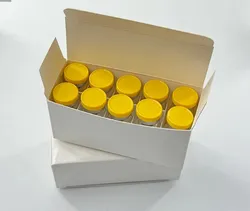

Pal-AHK (200mg) Research Peptide: A Lipidated Tripeptide for ECM & Fibroblast Studies
If your research investigates extracellular matrix (ECM) dynamics, fibroblast signalling, or the molecular mechanisms underlying hair follicle cycling, Pal-AHK (200mg) research peptide represents a precisely defined synthetic tool worthy of consideration. Also known as Palmitoyl Tripeptide‑3, this compound is a lipidated tripeptide (Pal‑Ala‑His‑Lys) that combines the bioactive AHK amino acid sequence with a palmitoyl (C16 fatty acid) chain. This structural modification enhances membrane affinity and lipophilicity, making it a potentially useful probe for studying cell‑membrane interactions, ECM modulation, and receptor signalling pathways in a range of experimental contexts.
At Wuhan Top Miracle Peptides, we supply high‑purity Pal-AHK (200mg) research peptide to research institutions and wholesale buyers across the United Kingdom, France, Germany, Spain, Sweden, Italy, and the USA. Every batch is lyophilised, HPLC‑verified to ≥98% purity, and accompanied by a Certificate of Analysis (COA), ensuring your investigations into ECM biology, fibroblast activity, and signalling pathways begin with uncompromising quality.
What Is Pal‑AHK and How Does It Work?
To fully appreciate the research potential of Pal-AHK (200mg) research peptide, it is essential to understand its biochemical design and the mechanistic hypotheses that have emerged from the available literature.
The Pal‑AHK Tripeptide: Structure and Design
Pal‑AHK is a synthetic tripeptide consisting of alanine, histidine, and lysine (AHK), conjugated at the N‑terminus with a palmitoyl (hexadecanoyl) group. The sequence is Pal‑Ala‑His‑Lys‑OH (Pal‑AHK). Its molecular formula is C₃₁H₅₆N₆O₅, and its molecular weight is approximately 592.81 g/mol.
The basic residues (histidine and lysine) may confer metal‑binding potential, particularly to divalent cations such as copper (Cu²⁺), analogous to related peptides like GHK. The palmitoyl group—a 16‑carbon fatty acid chain—enhances lipophilicity and membrane affinity, supporting interactions within lipid milieus such as cell membranes. This dual‑phase design may allow Pal‑AHK to act as a bridging molecule between membrane components and cytosolic or extracellular targets.
Proposed Mechanism of Action: ECM Modulation and Signalling
The biological activity of Pal-AHK (200mg) research peptide is hypothesised to involve multiple intersecting mechanisms:
-
Fibroblast Signalling: Pal‑AHK functions as a signalling molecule that interacts with dermal fibroblasts and endothelial cells. It stimulates the production of type I collagen, fibronectin, and glycosaminoglycans—key extracellular matrix components essential for tissue architecture.
-
ECM Synthesis and Remodelling: In cell culture experiments, the non‑lipidated AHK has been associated with elevated collagen type I production—some reports quantify up to a ~300% increase in collagen I synthesis under peptide exposure. The lipidated derivative may improve penetration into ECM‑adjacent areas.
-
MMP Modulation: Pal‑AHK appears to suppress excessive matrix metalloproteinase (MMP) activity in contexts where ECM degradation is pathologically elevated, such as in fibrotic models or engineered tissue remodelling assays.
-
Angiogenic Signalling: Computational docking studies propose that AHK residues may interact with VEGFR2 (vascular endothelial growth factor receptor 2), implying a possible modulatory role in angiogenic signalling. The peptide also upregulates VEGF, enhancing blood supply to support cellular regeneration.
-
Cellular Survival and Apoptosis: AHK has been reported to shift the Bcl‑2/Bax ratio toward cell survival and reduce markers of apoptosis, such as cleaved caspase‑3 and PARP cleavage.
-
Antioxidant Action: Pal‑AHK may exhibit anti‑oxidative activity, helping to neutralise free radicals that cause oxidative stress and cellular damage.
Research Note: Palmitoylation and Activity
Studies have primarily investigated the action of non‑palmitoylated AHK. However, Pal‑AHK likely exerts similar impacts, as adding a palmitoyl group is not expected to significantly alter the compound’s mechanism of action. Palmitoylation is typically considered to enhance cell penetration capacity, which may make the peptide more capable of exerting its effects in experimental settings.
Key Research Applications for Pal‑AHK (200mg)
Pal-AHK (200mg) research peptide is a versatile tool with potential applications spanning several domains of biomedical research.
1. Extracellular Matrix (ECM) and Fibroblast Research
The most established research area for Pal‑AHK lies in its interface with ECM regulation. Applications include:
-
Collagen Synthesis Studies: Investigating the molecular pathways by which Pal‑AHK stimulates type I collagen production in dermal fibroblasts
-
ECM Remodelling Assays: Studying the balance of ECM synthesis and degradation, including modulation of matrix metalloproteinases (MMPs) and their inhibitors (TIMPs)
-
Fibroblast Proliferation and Viability: Exploring how Pal‑AHK influences dermal cell multiplication and viability
-
Tissue Engineering Models: Investigating Pal‑AHK’s effects on ECM dynamics in engineered tissue constructs and fibrotic models
2. Angiogenesis and Vascular Signalling Research
Pal‑AHK’s potential to interact with VEGF signalling pathways offers opportunities for vascular research:
-
Endothelial Cell Studies: Investigating Pal‑AHK’s effects on endothelial cell proliferation, migration, and capillary sprouting
-
VEGF Signalling Pathways: Exploring how Pal‑AHK may modulate VEGF‑driven signalling axes and receptor clustering
-
Microvascular Models: Studying Pal‑AHK in endothelial monolayers and microfluidic vasculature networks
3. Hair Follicle and Dermal Papilla Cell Research
Pal‑AHK has demonstrated promising results in hair follicle biology:
-
Hair Cycle Regulation: Investigating how Pal‑AHK may help extend the anagen (growth) phase of the hair cycle
-
Dermal Papilla Cell Proliferation: Exploring the proliferation of dermal papilla cells (DPCs) and inhibition of their apoptosis
-
Apoptosis Signalling: Studying the Bcl‑2/Bax ratio and reduction of negative growth factors such as cleaved caspase‑3 and PARP
4. Cellular Survival and Stress Response Studies
Pal‑AHK is thought to have a supportive role in cell survival signalling pathways:
-
Apoptosis Modulation: Investigating how Pal‑AHK shifts the Bcl‑2/Bax ratio toward cell survival and reduces markers of apoptosis
-
Oxidative Stress Research: Exploring Pal‑AHK’s potential anti‑oxidative action and its ability to neutralise free radicals
-
TGF‑β Signalling: Studying how Pal‑AHK may modulate TGF‑β1 levels and its downstream effects on inflammation and tissue remodelling
5. Formulation and Delivery System Research
Pal‑AHK’s amphiphilic structure ensures compatibility with various formulation bases:
-
Lipid‑Based Carriers: Exploring encapsulation in liposomes and solid lipid nanoparticles to enhance delivery
-
Transdermal Patch Technologies: Testing Pal‑AHK in transdermal patch technologies for prolonged compound delivery
-
Formulation Stability Studies: Investigating the stability and activity of Pal‑AHK in various formulation contexts
Chemical & Physical Specifications for Pal-AHK (200mg)
Accurate characterisation of Pal-AHK (200mg) research peptide is essential for reproducible experimental design.
| Parameter | Specification |
|---|---|
| Common Names | Pal‑AHK, Palmitoyl Tripeptide‑3, Pal‑Ala‑His‑Lys |
| Amino Acid Sequence | Pal‑Ala‑His‑Lys‑OH (Pal‑AHK) |
| Molecular Formula | C₃₁H₅₆N₆O₅ |
| Molecular Weight | ~592.81 g/mol |
| CAS Number | 147732‑56‑7 (related Pal‑GHK) |
| Purity | ≥98% (HPLC verified) |
| Appearance | White to off‑white lyophilised powder |
| Solubility | Soluble in water and DMSO |
| Storage (Lyophilised) | –20°C, sealed, protected from light; stable for up to 2 years |
| Storage (Reconstituted) | 2‑8°C for up to 28 days; single‑use aliquots at –20°C for up to 3 months |
Note: The 200 mg mass refers to the weight of the peptide in its lyophilised form. Pal‑AHK is typically supplied as a TFA salt, which enhances aqueous solubility.
Reconstitution & Handling Protocol for Pal‑AHK (200mg)
Proper reconstitution of Pal-AHK (200mg) research peptide is critical for maintaining its structural integrity and biological activity.
Step 1 – Preparation
-
Bring the sealed Pal‑AHK vial and your chosen diluent (sterile bacteriostatic water or sterile PBS, pH 5‑7) to room temperature. Condensation can degrade the lyophilised powder.
-
Clean your work surface with 70% ethanol and lay out sterile syringes, alcohol wipes and a clean work mat.
Step 2 – Vial Sanitisation
-
Wipe the rubber stopper of the Pal‑AHK vial with a fresh 70% ethanol wipe. Allow the alcohol to evaporate completely before piercing.
Step 3 – Reconstitution
-
Draw your desired volume of diluent into a sterile syringe. A common starting concentration for research applications is 200 mg per 20 mL of diluent, yielding a 10 mg/mL stock solution.
-
Insert the needle and slowly inject the diluent against the inner glass wall. Do not spray directly onto the lyophilised powder.
-
Gently swirl the vial until the solution is clear and fully dissolved. Do not shake vigorously, as shaking can cause denaturation.
Step 4 – Aliquoting & Storage
-
Immediately after dissolution, aliquot the reconstituted Pal‑AHK into single‑use sterile vials.
-
Store aliquots at –20°C. Avoid repeated freeze‑thaw cycles.
-
Once thawed, store at 2‑8°C and use within 28 days.
Concentration Reference Table for Pal-AHK (200mg)
| Vial Mass | Diluent Volume | Final Concentration |
|---|---|---|
| 200 mg | 20 mL | 10 mg/mL |
| 200 mg | 10 mL | 20 mg/mL |
| 200 mg | 40 mL | 5 mg/mL |
Adjust diluent volume based on your experimental requirements.
Storage & Stability Guidelines for Pal-AHK (200mg)
| Storage Condition | Shelf Life | Notes |
|---|---|---|
| Lyophilised at –20°C, unopened | 2 years | Use desiccant, protect from light. |
| Lyophilised at 2‑8°C, unopened | 6‑12 months | –20°C storage is strongly preferred for long‑term stability. |
| Reconstituted at 2‑8°C | Up to 28 days | Must be sterile; use aseptic technique for each withdrawal. |
| Reconstituted aliquots at –20°C | Up to 3 months | Single freeze only; discard after thawing. |
Why Choose Wuhan Top Miracle Peptides for Pal‑AHK (200mg)?
As an authentic licensed peptide supplier based in the United Kingdom, we supply Pal-AHK (200mg) research peptide and a wide range of research‑grade compounds under rigorous quality assurance protocols, fully aligned with Google’s E‑E‑A‑T standards (Experience, Expertise, Authoritativeness, Trustworthiness).
-
Verified Purity: Independent HPLC analysis with purity guaranteed ≥98% for every batch.
-
GMP‑Compliant Manufacturing: All peptides are synthesised in ISO 13485:2016 and GMP‑certified facilities, ensuring batch‑to‑batch consistency.
-
Full Traceability: Batch‑specific Certificates of Analysis (COA) are available for every order.
-
Wholesale Supply: We serve research institutions, laboratories, and wholesale buyers across the UK, EU, and USA with flexible volume pricing and reliable logistics.
-
UK‑Based Regulatory Compliance: All products are supplied strictly as research‑grade chemicals for laboratory use only (RUO).
Researchers across the United Kingdom—including those at leading institutions in London, Cambridge, Oxford, Manchester, and Edinburgh—trust us for fast domestic delivery, transparent documentation and professional technical support.
FAQ: Pal‑AHK (200mg) Research Peptide
What is Pal‑AHK (200mg) research peptide?
Pal‑AHK (Palmitoyl Tripeptide‑3) is a synthetic tripeptide (Pal‑Ala‑His‑Lys‑OH) conjugated with a palmitoyl (C16 fatty acid) chain. It is a lipidated analogue of the naturally occurring AHK peptide, designed to enhance membrane affinity and lipophilicity for research applications.
What is the sequence and molecular weight of Pal‑AHK?
The sequence is Pal‑Ala‑His‑Lys‑OH (Pal‑AHK). Its molecular formula is C₃₁H₅₆N₆O₅, and its molecular weight is approximately 592.81 g/mol.
What are the primary research applications for Pal‑AHK?
Pal‑AHK is used in extracellular matrix and fibroblast research (collagen synthesis, ECM remodelling), angiogenesis and vascular signalling studies, hair follicle and dermal papilla cell research, cellular survival and stress response studies, and formulation and delivery system research.
What is the proposed mechanism of action of Pal‑AHK?
Pal‑AHK functions as a signalling molecule that interacts with dermal fibroblasts and endothelial cells, stimulating type I collagen, fibronectin, and glycosaminoglycan production. It may modulate MMP activity, upregulate VEGF, shift the Bcl‑2/Bax ratio toward cell survival, and exhibit anti‑oxidative action.
What purity does your Pal‑AHK (200mg) meet?
Our Pal‑AHK is tested to ≥98% purity by HPLC. A Certificate of Analysis (COA) is supplied with every order.
How should I reconstitute Pal‑AHK (200mg)?
Reconstitute with sterile bacteriostatic water or sterile PBS (pH 5‑7). Allow the vial to reach room temperature, then slowly inject the diluent against the inner glass wall and swirl gently. Do not shake. A typical starting concentration is 10 mg/mL.
How should I store reconstituted Pal-AHK (200mg)?
Reconstituted Pal‑AHK should be stored at 2‑8°C and used within 28 days. For longer storage, aliquot immediately into single‑use vials and store at –20°C for up to 3 months. Avoid repeated freeze‑thaw cycles.
Is Pal-AHK (200mg) research peptide legal to purchase in the UK?
Yes. Pal‑AHK is a laboratory reagent sold for research use only (RUO). It is fully legal to purchase, possess, and use in the United Kingdom for legitimate in‑vitro or in‑vivo scientific research, provided it is not marketed with therapeutic claims.
Does Wuhan Top Miracle Peptides ship internationally?
Yes. We ship across the EU (France, Germany, Spain, Sweden, Italy) and to the USA from our UK warehouse. Wholesale pricing is available for bulk orders.
Wholesale Pal-AHK 200mg Supply Across the UK and Europe
Wuhan Top Miracle Peptides supports wholesale peptide and cosmetic ingredient buyers in the United Kingdom and international markets.
We Support Enquiries From:
- United Kingdom
- France
- Germany
- Spain
- Sweden
- Italy
- USA
- Wider Europe
For larger Pal-AHK (200mg) enquiries, contact our team before ordering. This helps confirm stock, wholesale pricing, documentation, shipping options, and buyer requirements.
Where to Buy Pal-AHK (200mg) in the UK
If you are searching for where to buy Pal-AHK (200mg) in the UK, Wuhan Top Miracle Peptides provides a simple research-focused enquiry process.
How to Order
- Review the Pal-AHK (200mg) product details.
- Check the current label and batch information.
- Confirm the INCI name or product identity from documentation.
- Ask about COA and purity-related documentation.
- Confirm your shipping country.
- Discuss wholesale quantity requirements.
- Place your enquiry with support from our team.
Bulk Peptides Page
Shipping & Returns Page
Contact Us Page
Shop Page
Quality / Compliance Page
Google Search Central
GOV.UK / MHRA
ASA / CAP Code Section 12
Scientific or ingredient reference source such as PubMed, NCBI, PubChem, CosIng, or an official cosmetic ingredient database
Pal-AHK (200mg)
From its design as a lipidated analogue of the AHK tripeptide to its hypothesised roles in ECM modulation, fibroblast signalling, angiogenesis, and cellular survival pathways, Pal-AHK (200mg) research peptide provides a precisely defined platform for advanced biomedical research. Its ability to stimulate collagen synthesis, modulate MMP activity, upregulate VEGF, and influence apoptosis signalling—supported by in silico modelling and cell culture studies published in the peer‑reviewed literature—makes it a valuable addition to any laboratory investigating ECM dynamics, tissue remodelling, or vascular biology. By choosing high‑purity, lab‑verified Pal-AHK (200mg) research peptide from Wuhan Top Miracle Peptides, you ensure that your research is built on a foundation of quality, reproducibility, and scientific integrity.
Ready to advance your research with Pal‑AHK (200mg)? Browse our product catalogue, request a wholesale quote, or contact our support team today to discuss your laboratory’s specific needs. Place your order now and receive GMP‑grade Pal‑AHK delivered directly to your facility in the UK, EU, or USA.
Be the first to review “Pal-AHK (200mg)”
Related products
Peptides
Peptides
Reviews
There are no reviews yet.