
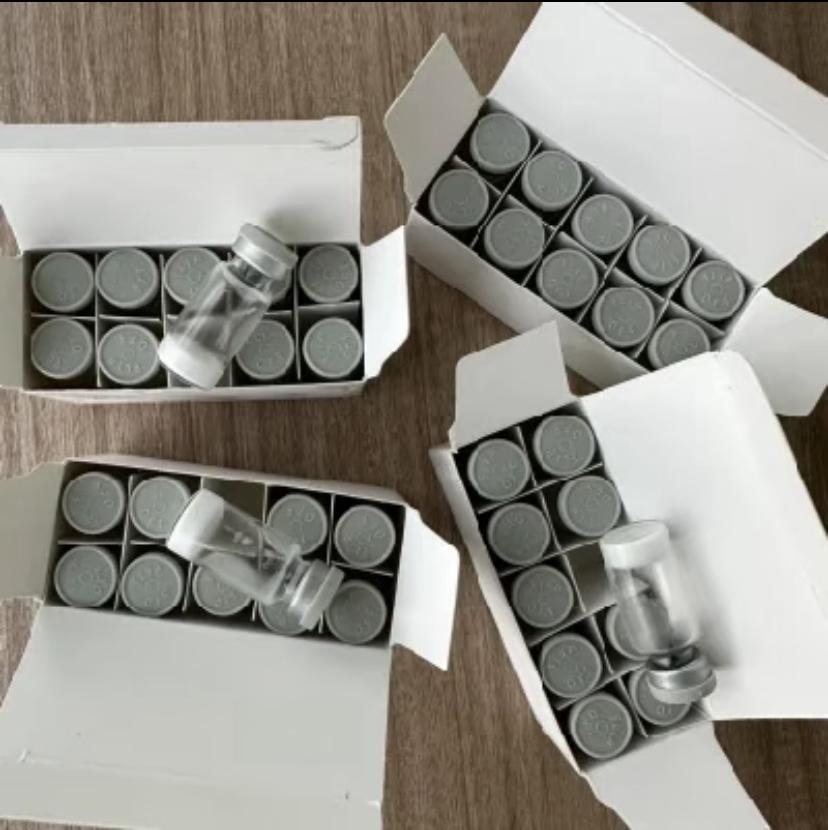
Receptor Grade IGF-1 LR3 (1mg): A High-Purity Research Reagent for IGF-1 Signalling Studies
If your research involves the insulin-like growth factor 1 (IGF-1) axis, cellular proliferation, or the PI3K/AKT signalling pathway, Receptor Grade IGF-1 LR3 (1mg) provides a reliable, high-quality research reagent for your experiments. This Long Arg3 IGF-1 (LR3-IGF-1) is an 83‑amino‑acid analogue of human IGF‑1, specifically engineered for enhanced potency and stability in cell culture and assay systems. By incorporating a key structural modification—an arginine substitution at position 3 and a 13‑amino‑acid N‑terminal extension—this analogue exhibits markedly reduced binding to IGF‑binding proteins (IGFBPs). This reduction in IGFBP affinity allows for more consistent and reproducible activation of the IGF‑1 receptor, making Receptor Grade IGF-1 LR3 (1mg) a valuable tool for studies on cell growth, receptor signalling, and IGF biology.
At Wuhan Top Miracle Peptides, we supply high‑purity Receptor Grade IGF-1 LR3 (1mg) to research institutions and wholesale buyers across the United Kingdom, France, Germany, Spain, Sweden, Italy, and the USA. Every batch is lyophilised, HPLC‑ and SDS‑PAGE‑verified to >95% purity, and accompanied by a Certificate of Analysis (COA), ensuring your investigations into IGF‑1 receptor pharmacology, cell signalling, and regenerative biology begin with uncompromising quality.
What Is Receptor Grade IGF-1 LR3 and How Does It Work?
To fully appreciate the research potential of Receptor Grade IGF-1 LR3 (1mg), it is essential to understand its molecular design and the mechanism by which it achieves enhanced biological activity.
The LR3 Modification: A Structurally Enhanced IGF‑1 Analogue
LR3‑IGF‑1 is an 83‑amino‑acid analogue of human IGF‑1, comprising the complete human IGF‑1 sequence with two key modifications:
-
Arginine Substitution at Position 3: The glutamic acid (Glu) at position 3 of native IGF‑1 is replaced with arginine (Arg). This substitution is responsible for the “R3” designation and significantly reduces the peptide’s affinity for IGF‑binding proteins.
-
N‑Terminal Extension: A 13‑amino‑acid extension peptide is added at the N‑terminus, further enhancing the peptide’s stability and biological activity.
These modifications result in an analogue that retains full binding affinity for the IGF‑1 receptor but exhibits dramatically reduced affinity for IGFBPs. In fact, IGF‑1 has approximately 1000‑fold higher affinity for IGFBP‑3 and IGFBP‑4 than LR3‑IGF‑1.
Mechanism of Action: Sustained IGF‑1 Receptor Activation
The biological activity of Receptor Grade IGF-1 LR3 (1mg) is rooted in its ability to provide sustained, high‑level activation of the type 1 IGF receptor:
-
Receptor Binding with Similar Affinity: LR3‑IGF‑1 binds to the IGF‑1 receptor with affinity similar to that of wild‑type IGF‑1.
-
Reduced IGFBP Sequestration: Because it is not rapidly neutralised by IGFBPs, LR3‑IGF‑1 achieves a higher level of receptor occupancy.
-
Enhanced Signalling Activation: This leads to more robust activation of downstream signalling molecules, including the PI3K/AKT pathway (promoting cell survival and inhibiting apoptosis) and ERK1/2 signalling (driving proliferation and differentiation).
-
Increased Biological Potency: In cultured L6 myoblasts, the reduced association with IGFBPs gives LR3‑IGF‑1 a 5‑ to 10‑fold greater biological potency compared to native IGF‑1.
Key Research Applications for Receptor Grade IGF-1 LR3 (1mg)
Receptor Grade IGF-1 LR3 (1mg) is a versatile research reagent with applications spanning several domains of cellular and molecular research.
IGF‑1 Receptor & Signal Transduction Research
The peptide’s capacity to activate IGF‑1 receptor‑mediated signalling makes it an indispensable reagent for probing intracellular pathways involved in metabolism, apoptosis, and gene expression. Researchers frequently employ LR3‑IGF‑1 to delineate the differential effects of IGF‑1 analogues on downstream effectors, providing insights into the specificity and redundancy of growth factor signalling.
Cell Proliferation & Survival Studies
LR3‑IGF‑1 is one of the most potent natural activators of the AKT signalling pathway, which stimulates cell growth and proliferation and inhibits apoptosis. By binding to the IGF‑1 receptor and activating downstream signalling cascades, it enables researchers to dissect the molecular underpinnings of mitogenesis and survival. Its enhanced resistance to IGFBPs ensures sustained receptor engagement, providing robust and reproducible stimulation in cell culture models.
Stem Cell & Regenerative Medicine Research
LR3‑IGF‑1 is widely used in stem cell research to support the expansion and maintenance of various stem cell populations. It has been shown to regulate lymphopoiesis by stimulating the proliferation and differentiation of T and B cells in lymphoid organs. Together with other growth factors, IGF‑I stimulates the differentiation and proliferation of myeloid cells.
Muscle, Bone & Cartilage Research
As a mitogenic polypeptide growth factor, LR3‑IGF‑1 stimulates the proliferation and survival of various cell types, including muscle, bone, and cartilage tissue in vitro. Experimental infusion of LR3‑IGF‑1 into late‑gestation fetal sheep has been shown to increase fetal organ growth and skeletal muscle myoblast proliferation. This positions LR3‑IGF‑1 as a valuable tool for studying musculoskeletal development and regeneration.
Mammalian Cell Culture & Biopharmaceutical Manufacturing
LR3‑IGF‑1 was specifically developed for supplementation of mammalian cell culture to support the survival and proliferation of cells. Supplementation of cell cultures with LR3‑IGF‑1 at a much lower concentration results in equivalent or better productivity than supplementation with standard concentrations of insulin. This makes it an ideal choice for both research and large‑scale culturing of CHO, ES, NK, HSC, MSC, fibroblast, hybridomas, and many other cell types.
Chemical & Physical Specifications
Accurate characterisation of Receptor Grade IGF-1 LR3 (1mg) is essential for reproducible experimental design. Below are the verified specifications from multiple research suppliers.
| Parameter | Specification |
|---|---|
| Common Names | LR3-IGF-1, Long Arg3 IGF-1, IGF-I LR3, rhLR3IGF-1 |
| Amino Acid Count | 83 amino acids (analogue of human IGF‑1) |
| Molecular Weight | ~9.1 kDa (9110.6 ± 2 Da) |
| CAS Number | 946870-92-4 |
| Purity | >95% (SDS-PAGE & HPLC) |
| Biological Activity | ED₅₀ < 10 ng/ml (CHO cell proliferation / L6 myoblast protein synthesis) |
| Endotoxin Level | < 1 EU/μg (LAL method) |
| Appearance | White to off‑white lyophilised powder |
| Source | Produced in E. coli |
| Storage (Lyophilised) | 2‑8°C for up to 2 years (as freeze‑dried product) |
| Storage (Reconstituted) | 2‑8°C for short‑term use; single‑use aliquots at –20°C for long‑term storage |
Note on Purity: The 1 mg mass refers to the weight of the protein in its lyophilised form. Receptor Grade indicates a high‑quality research reagent specifically developed for studies on cell growth, IGF receptors, and IGF‑binding proteins.
Reconstitution & Handling Protocol for Receptor Grade IGF-1 LR3 (1mg)
Proper reconstitution of Receptor Grade IGF-1 LR3 (1mg) is critical for maintaining its structural integrity and biological activity.
Step 1 – Preparation
-
Bring the sealed LR3‑IGF‑1 vial and your chosen diluent to room temperature.
-
Recommended diluent: Sterile 10 mM HCl or sterile PBS (pH 5–7) containing 0.1% carrier protein (e.g., BSA or HSA) to prevent adsorption to surfaces.
-
Clean your work surface with 70% ethanol and lay out sterile syringes, alcohol wipes and a clean work mat.
Step 2 – Vial Sanitisation
-
Wipe the rubber stopper of the LR3‑IGF‑1 vial with a fresh 70% ethanol wipe. Allow the alcohol to evaporate completely before piercing.
-
Briefly centrifuge the vial prior to opening to bring the contents to the bottom.
Step 3 – Reconstitution
-
Draw your desired volume of diluent into a sterile syringe. A common starting concentration for research applications is 1 mg per 1 mL of diluent, yielding a 1 mg/mL stock solution.
-
Insert the needle and slowly inject the diluent against the inner glass wall. Do not spray directly onto the lyophilised powder.
-
Gently swirl the vial until the solution is clear and fully dissolved. Do not shake vigorously, as shaking can cause denaturation.
Step 4 – Aliquoting & Storage
-
Immediately after dissolution, aliquot the reconstituted LR3‑IGF‑1 into single‑use sterile vials to avoid repeated freeze‑thaw cycles.
-
Store aliquots at –20°C for long‑term storage. Avoid repeated freeze‑thaw cycles, as this can significantly reduce biological activity.
-
Once thawed, store at 2‑8°C and use within a short period.
Concentration Reference Table
| Vial Mass | Diluent Volume | Final Concentration |
|---|---|---|
| 1 mg | 1.0 mL | 1 mg/mL |
| 1 mg | 2.0 mL | 0.5 mg/mL |
| 1 mg | 0.5 mL | 2 mg/mL |
*Adjust diluent volume based on your experimental requirements. For cell culture applications, further dilute to working concentrations (typically 10–100 ng/mL).*
Storage & Stability Guidelines for Receptor Grade IGF-1 LR3 (1mg)
| Storage Condition | Shelf Life | Notes |
|---|---|---|
| Lyophilised at 2‑8°C | At least 2 years | Store as supplied, protected from light |
| Lyophilised at –20°C | Up to 6 months | Stable for up to 6 months at –80°C from date of receipt |
| Reconstituted at 2‑8°C | Short‑term use | Use within days; protein may adsorb to surfaces |
| Reconstituted aliquots at –20°C | Up to 3 months | Stock solution can be stored at least 3 months at –20°C |
| Reconstituted at –80°C | Up to 6 months | Optimal for long‑term storage with carrier protein |
Why Choose Wuhan Top Miracle Peptides for Receptor Grade IGF-1 LR3 (1mg)?
As an authentic licensed peptide supplier based in the United Kingdom, we supply Receptor Grade IGF-1 LR3 (1mg) and a wide range of research‑grade reagents under rigorous quality assurance protocols, fully aligned with Google’s E‑E‑A‑T standards.
-
Verified Purity: Independent HPLC and SDS‑PAGE analysis with purity guaranteed >95% for every batch.
-
Biological Activity Verified: Each batch is tested for biological activity (ED₅₀ < 10 ng/ml) to ensure consistent performance.
-
Low Endotoxin: Endotoxin levels are maintained at < 1 EU/μg.
-
GMP‑Compliant Manufacturing: All proteins are produced in ISO 13485:2016 and GMP‑certified facilities.
-
Full Traceability: Batch‑specific Certificates of Analysis (COA) are available for every order.
-
Wholesale Supply: We serve research institutions, laboratories, and wholesale buyers across the UK, EU, and USA with flexible volume pricing and reliable logistics.
-
UK‑Based Regulatory Compliance: All products are supplied strictly as research‑grade reagents for laboratory use only (RUO).
FAQ: Receptor Grade IGF-1 LR3 (1mg)
What is Receptor Grade IGF-1 LR3 (1mg)?
Receptor Grade IGF-1 LR3 is a synthetic 83‑amino‑acid analogue of human IGF‑1 with enhanced biological potency. It contains an arginine substitution at position 3 and a 13‑amino‑acid N‑terminal extension, which significantly reduce binding to IGF‑binding proteins and prolong its half‑life.
What is the molecular weight of IGF-1 LR3?
The molecular weight is approximately 9.1 kDa (9110.6 ± 2 Da).
What are the primary research applications for Receptor Grade IGF-1 LR3?
IGF-1 LR3 is used in IGF‑1 receptor and signal transduction research, cell proliferation and survival studies, stem cell and regenerative medicine research, muscle, bone and cartilage research, and mammalian cell culture optimisation.
How does IGF-1 LR3 differ from native IGF-1?
IGF‑1 LR3 has approximately 1000‑fold lower affinity for IGF‑binding proteins (IGFBPs) compared to native IGF‑1. This results in enhanced potency, a significantly prolonged half‑life, and a 5‑ to 10‑fold greater biological potency in cell culture models.
What purity does your Receptor Grade IGF-1 LR3 (1mg) meet?
Our IGF‑1 LR3 is tested to >95% purity by SDS‑PAGE and HPLC. A Certificate of Analysis (COA) is supplied with every order.
How should I reconstitute Receptor Grade IGF-1 LR3 (1mg)?
Reconstitute with sterile 10 mM HCl or sterile PBS (pH 5‑7) containing 0.1% carrier protein (e.g., BSA) to prevent adsorption. Allow the vial to reach room temperature, briefly centrifuge to bring contents to the bottom, then slowly inject the diluent against the inner glass wall and swirl gently. Do not shake.
How should I store reconstituted IGF-1 LR3?
Reconstituted IGF‑1 LR3 should be aliquoted into single‑use vials and stored at –20°C for up to 3 months. Avoid repeated freeze‑thaw cycles. Including a carrier protein (0.1% BSA or HSA) in the reconstitution buffer is recommended to prevent loss due to adsorption.
Is Receptor Grade IGF-1 LR3 research reagent legal to purchase in the UK?
Yes. Receptor Grade IGF‑1 LR3 is a laboratory reagent sold for research use only (RUO). It is fully legal to purchase, possess, and use in the United Kingdom for legitimate in‑vitro or in‑vivo scientific research, provided it is not marketed with therapeutic claims.
What is the difference between Receptor Grade and Media Grade IGF-1 LR3?
Receptor Grade is a high‑quality research reagent for studies on cell growth, IGF receptors and IGF‑binding proteins. Media Grade is designed for commercial cell culture applications at a more economical cost for studies requiring larger quantities.
Does Wuhan Top Miracle Peptides ship internationally?
Yes. We ship across the EU (France, Germany, Spain, Sweden, Italy) and to the USA from our UK warehouse. Wholesale pricing is available for bulk orders.
Wholesale IGF-1 LR3 1mg Supply Across the UK and Europe
Wuhan Top Miracle Peptides supports wholesale peptide buyers in the United Kingdom and international markets.
We Support Enquiries From:
- United Kingdom
- France
- Germany
- Spain
- Sweden
- Italy
- USA
- Wider Europe
For larger IGF-1 LR3 1mg enquiries, contact our team before ordering. This helps confirm stock, wholesale pricing, documentation, shipping options, and buyer verification requirements.
Where to Source Receptor Grade IGF-1 LR3 (1mg) in the UK
If you are searching for where to source IGF-1 LR3 1mg in the UK, Wuhan Top Miracle Peptides provides a simple professional enquiry process.
Professional Enquiry Process
- Review the IGF-1 LR3 1mg product details.
- Check the current label and batch information.
- Confirm the product identity from documentation.
- Contact our team for availability.
- Ask about COA and purity-related documentation.
- Confirm your shipping country.
- Discuss wholesale quantity requirements.
- Complete buyer verification where required.
Bulk Peptides Page
Shipping & Returns Page
Contact Us Page
Shop Page
Quality / Compliance Page
Google Search Central
GOV.UK / MHRA
ASA / CAP Code Section 12
Scientific reference source such as PubMed, NCBI, or a validated protein database
From its innovative design as a long‑acting IGF‑1 analogue with dramatically reduced IGFBP binding to its well‑documented role in activating the PI3K/AKT and ERK1/2 signalling pathways, Receptor Grade IGF-1 LR3 (1mg) provides a uniquely potent and sustained platform for advanced cellular and molecular research. Its ability to drive robust cell proliferation, promote survival through apoptosis inhibition, and support stem cell expansion—supported by decades of peer‑reviewed research and validated biological activity—makes it an essential addition to any laboratory investigating growth factor signalling, regenerative biology, or cell culture optimisation. By choosing high‑purity, lab‑verified Receptor Grade IGF-1 LR3 (1mg) from Wuhan Top Miracle Peptides, you ensure that your research is built on a foundation of quality, reproducibility, and scientific integrity.
Ready to advance your research with Receptor Grade IGF-1 LR3 (1mg)? Browse our product catalogue, request a wholesale quote, or contact our support team today to discuss your laboratory’s specific needs. Place your order now and receive GMP‑grade IGF‑1 LR3 delivered directly to your facility in the UK, EU, or USA.
Be the first to review “Receptor Grade IGF-1 LR3 (1mg)”
Related products
Reviews
There are no reviews yet.