BPC-157 & TB-500 & GHK-Cu Blend Research Peptide: A Synergistic Triple‑Action Tool for Angiogenesis, ECM & Wound Healing Studies
If your research explores the complex interplay between angiogenesis, extracellular matrix (ECM) remodelling, and tissue repair, the BPC-157 & TB-500 & GHK-Cu Blend research peptide offers a sophisticated, multi‑pathway experimental platform. This 60 mg (or 50 mg) formulation combines three well‑characterised wound‑healing peptides—BPC-157 (a stable gastric pentadecapeptide), TB-500 (a synthetic fragment of Thymosin Beta‑4), and GHK-Cu (a naturally occurring copper‑binding tripeptide)—each acting through complementary mechanisms to promote angiogenesis, integrin‑mediated ECM remodelling, fibroblast activation, and collagen synthesis..
By targeting distinct yet convergent pathways, this blend allows researchers to model the synergistic interplay between these regenerative signalling systems, providing deeper insight into the regulatory circuits that govern tissue repair and recovery.
At Wuhan Top Miracle Peptides, we supply high‑purity BPC-157 & TB-500 & GHK-Cu Blend research peptide to research institutions and wholesale buyers across the United Kingdom, France, Germany, Spain, Sweden, Italy, and the USA. Every batch is lyophilised, HPLC‑verified to ≥98% purity, and accompanied by a Certificate of Analysis (COA), ensuring your investigations into angiogenesis, ECM biology, and tissue regeneration begin with uncompromising quality.
What Is the BPC-157 & TB-500 & GHK-Cu Blend and How Does It Work?
To fully appreciate the research potential of the BPC-157 & TB-500 & GHK-Cu Blend research peptide, it is essential to understand the distinct yet complementary mechanisms of its three components.
BPC-157: The Stable Gastric Pentadecapeptide
BPC-157 (Body Protection Compound-157) is a synthetic 15‑amino‑acid peptide derived from a naturally occurring peptide found in human gastric juice. It is notable for its stability — it remains intact in human gastric juice for more than 24 hours — and its pleiotropic tissue‑protective effects.
Mechanism of Action: BPC‑157 promotes angiogenesis primarily through the activation of the Vascular Endothelial Growth Factor Receptor 2 (VEGFR2) signalling pathway. It increases VEGFR2 expression and promotes its internalisation in vascular endothelial cells, leading to downstream activation of Akt and endothelial nitric oxide synthase (eNOS). This cascade ultimately promotes endothelial cell proliferation, migration, and survival. BPC‑157 also enhances growth hormone receptor expression, reduces inflammatory cytokines, and exerts cytoprotective effects across multiple organ systems.
TB-500: The Actin‑Binding Repair Fragment
TB‑500 is a synthetic peptide corresponding to the active site (residues 17‑23: LKKTETQ) of the naturally occurring protein Thymosin Beta‑4 (Tβ4). As a fragment, it retains the actin‑binding and cell‑migration‑promoting properties of the full‑length protein, but with enhanced stability.
Mechanism of Action: TB‑500 binds to actin monomers, sequestering them and thereby regulating actin filament dynamics. By modulating actin polymerisation, TB‑500 enhances cell migration to sites of injury, accelerates tissue repair, and promotes angiogenesis. It plays a key role in dermal wound healing, angiogenesis, and skin repair through its influence on cellular motility and cytoskeletal reorganisation.
GHK-Cu: The Copper‑Binding Gene Modulator
GHK-Cu (glycyl‑L‑histidyl‑L‑lysine‑copper complex) is a naturally occurring copper‑binding tripeptide found in human plasma. The peptide has a high affinity for copper(II) ions and forms the bioactive chelate GHK-Cu.
Mechanism of Action: GHK-Cu’s primary mechanism is its profound influence on gene expression. Research has shown that GHK can modulate the activity of over 4,000 human genes, essentially resetting pathological gene expression patterns to a younger, healthier state. It acts as a potent epigenetic modulator, upregulating genes involved in collagen synthesis, tissue repair, and angiogenesis, while downregulating those associated with inflammation and oxidative stress. GHK-Cu also exhibits antioxidant, anti‑inflammatory, and wound‑healing actions.
Mechanism of Synergy: Complementary Pathways in Tissue Repair
The scientific rationale for combining BPC-157, TB‑500, and GHK‑Cu lies in their convergent yet distinct mechanisms:
-
BPC‑157 provides the angiogenic signal, activating VEGFR2‑Akt‑eNOS signalling to promote new blood vessel formation at sites of injury.
-
TB‑500 enhances cellular motility, driving the migration of fibroblasts and other repair cells to the wound site.
-
GHK‑Cu provides the structural support, modulating gene expression to promote collagen synthesis, ECM remodelling, and tissue regeneration.
This triple‑pathway activation enables researchers to model the complex, multi‑stage process of tissue repair — from initial vascular response and cellular recruitment to matrix remodelling and functional recovery. The blend is used in experimental designs where multiple peptide classes are evaluated together under controlled laboratory conditions.
Key Research Applications for the BPC-157 & TB-500 & GHK-Cu Blend
The BPC-157 & TB-500 & GHK-Cu Blend research peptide is a versatile tool with applications spanning several domains of biomedical research.
1. Angiogenesis & Vascular Research
As a blend that promotes angiogenesis through multiple mechanisms, this formulation is a valuable tool for studying blood vessel formation and vascular integrity. Research applications include:
-
VEGFR2 Signalling Studies: Investigating the molecular pathways involved in BPC‑157‑induced VEGFR2‑Akt‑eNOS activation.
-
Endothelial Cell Function: Studying how the blend influences endothelial cell proliferation, migration, and tube formation.
-
Ischaemic Models: Exploring the peptide’s ability to accelerate blood flow recovery and increase vessel number in models of hind limb ischaemia.
2. Extracellular Matrix & Fibroblast Research
The blend promotes integrin‑mediated ECM remodelling and fibroblast activation, making it a valuable tool for studying connective tissue biology. Research applications include:
-
Collagen Synthesis: Investigating the synergistic effects of GHK‑Cu and BPC‑157 on collagen production.
-
Fibroblast Activation: Studying how the blend influences fibroblast migration, proliferation, and ECM deposition.
-
ECM Remodelling: Exploring the modulation of integrin‑mediated signalling pathways and matrix metalloproteinase (MMP) activity.
3. Wound Healing & Tissue Repair Research
As a blend of wound‑healing peptides, this formulation is a valuable tool for studying tissue regeneration. Research applications include:
-
Acute Wound Models: Investigating the blend’s ability to accelerate wound closure and promote tissue regeneration.
-
Musculoskeletal Repair: Studying the potential benefits of BPC‑157 and TB‑500 in tendon and muscle repair models.
-
Combination Studies: Comparing the blend’s effects against single‑compound controls to elucidate synergistic mechanisms.
4. Inflammatory & Recovery Research
BPC‑157 and TB‑500 are studied for their ability to influence inflammatory pathways and support tissue repair. Research applications include:
-
Inflammatory Signalling: Investigating how the blend modulates key pathways such as PI3K/Akt, mTOR, MAPK, TGF‑β, and AMPK.
-
Recovery Models: Exploring the blend’s potential to support recovery from injury or surgery.
-
Chronic Inflammation: Studying the blend’s effects in models of chronic inflammatory conditions.
Chemical & Physical Specifications for BPC-157 & TB-500 & GHK-Cu Blend
Accurate characterisation of the BPC-157 & TB-500 & GHK-Cu Blend research peptide is essential for reproducible experimental design.
| Parameter | Specification |
|---|---|
| Common Names | BPC-157 + TB-500 + GHK-Cu Blend, GLOW Stack |
| Components | BPC-157, TB-500, GHK-Cu |
| BPC-157 Sequence | Gly‑Glu‑Pro‑Pro‑Pro‑Gly‑Lys‑Pro‑Ala‑Asp‑Asp‑Ala‑Gly‑Leu‑Val |
| TB-500 Sequence | Ac‑Leu‑Lys‑Lys‑Thr‑Glu‑Thr‑Gln (Ac‑LKKTETQ) |
| GHK-Cu Sequence | Gly‑His‑Lys‑Cu²⁺ |
| BPC-157 Molecular Weight | ~1499.7 g/mol |
| TB-500 Molecular Weight | ~889.01 g/mol |
| GHK-Cu Molecular Weight | ~461.96 g/mol |
| Total Mass | 60 mg or 50 mg (lyophilised blend, as specified by batch) |
| Purity (Each Component) | ≥98% (HPLC verified) |
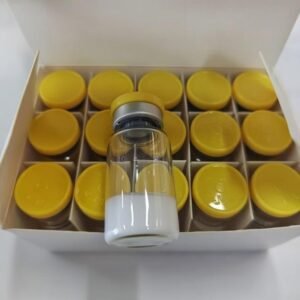
| Appearance | White to off‑white lyophilised powder |
| Solubility | Soluble in sterile water and sterile PBS (pH 5‑7) |
| Storage (Lyophilised) | –20°C, sealed, protected from light; stable for up to 2 years |
| Storage (Reconstituted) | 2‑8°C for short‑term use; single‑use aliquots at –20°C for up to 3 months |
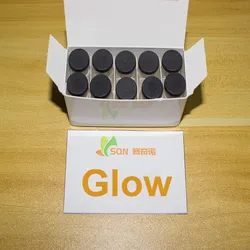
Note: The 60 mg or 50 mg mass represents the total peptide weight of the blend. The exact ratio of BPC‑157 to TB‑500 to GHK‑Cu is determined by the formulation (contact for details). The blend is supplied in a single lyophilised vial. GHK‑Cu imparts a characteristic blue tint to the lyophilised powder.
Reconstitution & Handling Protocol for the BPC-157 & TB-500 & GHK-Cu Blend
Proper reconstitution of the BPC-157 & TB-500 & GHK-Cu Blend research peptide is critical for maintaining the structural integrity and biological activity of all three peptides. Each component has a distinct stability profile, so careful handling is essential.
Step 1 – Preparation
-
Bring the sealed blend vial and your chosen diluent (sterile bacteriostatic water or sterile PBS, pH 5‑7) to room temperature. Condensation can degrade the lyophilised powder.
-
Clean your work surface with 70% ethanol and lay out sterile syringes, alcohol wipes and a clean work mat.
Step 2 – Vial Sanitisation
-
Wipe the rubber stopper of the blend vial with a fresh 70% ethanol wipe. Allow the alcohol to evaporate completely before piercing.
Step 3 – Reconstitution
-
Draw your desired volume of diluent into a sterile syringe. A common starting concentration for research applications is 1.5 mL of diluent per 5 mg BPC‑157, 10 mg TB‑500, and 27 mg GHK‑Cu.
-
Insert the needle and slowly inject the diluent against the inner glass wall. Do not spray directly onto the lyophilised powder.
-
Gently swirl the vial until the solution is clear and fully dissolved. GHK‑Cu may impart a slight blue tint to the solution — this is normal. Do not shake vigorously, as shaking can cause denaturation.
Step 4 – Aliquoting & Storage
-
Immediately after dissolution, aliquot the reconstituted peptide blend into single‑use sterile vials.
-
Store aliquots at –20°C. Avoid repeated freeze‑thaw cycles.
-
Once thawed, store at 2‑8°C and use within a short period.
Concentration Reference Table
| Blend Mass | Diluent Volume | Total Final Concentration |
|---|---|---|
| 60 mg | 1.5 mL | 40 mg/mL |
| 50 mg | 1.5 mL | 33.3 mg/mL |
Adjust diluent volume based on your experimental requirements. The exact concentration of each individual peptide within the blend is determined by the formulation’s component ratio.
Storage & Stability Guidelines for BPC-157 & TB-500 & GHK-Cu Blend
| Storage Condition | Shelf Life | Notes |
|---|---|---|
| Lyophilised at –20°C, unopened | 2 years | Use desiccant, protect from light |
| Lyophilised at 2‑8°C, unopened | 6‑12 months | –20°C storage is strongly preferred for long‑term stability |
| Reconstituted at 2‑8°C | Short‑term use | Use within days to weeks |
| Reconstituted aliquots at –20°C | Up to 3 months | Single freeze only; discard after thawing |
Why Choose Wuhan Top Miracle Peptides for the BPC-157 & TB-500 & GHK-Cu Blend?
As an authentic licensed peptide supplier based in the United Kingdom, we supply the BPC-157 & TB-500 & GHK-Cu Blend research peptide and a wide range of research‑grade compounds under rigorous quality assurance protocols, fully aligned with Google’s E‑E‑A‑T standards (Experience, Expertise, Authoritativeness, Trustworthiness).
-
Verified Purity: Independent HPLC analysis with purity guaranteed ≥98% for each component, every batch.
-
GMP‑Compliant Manufacturing: All peptides are synthesised under strict quality control conditions.
-
Full Traceability: Batch‑specific Certificates of Analysis (COA) are available for every order.
-
Wholesale Supply: We serve research institutions, laboratories, and wholesale buyers across the UK, EU, and USA with flexible volume pricing and reliable logistics.
-
UK‑Based Regulatory Compliance: All products are supplied strictly as research‑grade chemicals for laboratory use only (RUO).
Researchers across the United Kingdom—including those at leading institutions in London, Cambridge, Oxford, Manchester, and Edinburgh—trust us for fast domestic delivery, transparent documentation and professional technical support.
FAQ: BPC-157 & TB-500 & GHK-Cu Blend Research Peptide
What is the BPC-157 & TB-500 & GHK-Cu Blend research peptide?
It is a research‑grade formulation combining BPC‑157 (a stable gastric pentadecapeptide), TB‑500 (a synthetic fragment of Thymosin Beta‑4), and GHK‑Cu (a naturally occurring copper‑binding tripeptide). It is used as a triple‑pathway tool to study angiogenesis, ECM remodelling, fibroblast activation, and wound healing.
How does each component work?
BPC‑157 promotes angiogenesis via VEGFR2‑Akt‑eNOS activation. TB‑500 binds actin monomers to regulate actin filament dynamics and enhance cell migration. GHK‑Cu modulates the expression of over 4,000 human genes, promoting collagen synthesis and tissue repair.
What is the proposed synergy between these three peptides?
BPC‑157 provides the angiogenic signal, TB‑500 enhances cellular motility, and GHK‑Cu provides the structural support for ECM remodelling. Together, they model the complex, multi‑stage process of tissue repair.
What purity does your BPC-157 & TB-500 & GHK-Cu Blend meet?
Each component is tested to ≥98% purity by HPLC. A Certificate of Analysis (COA) is supplied with every order.
How should I reconstitute this peptide blend?
Reconstitute with sterile bacteriostatic water or sterile PBS (pH 5‑7). Allow the vial to reach room temperature, then slowly inject the diluent against the inner glass wall and swirl gently. Do not shake. A common starting concentration is 1.5 mL per 60 mg blend.
How should I store reconstituted peptide blends?
Reconstituted blends should be stored at 2‑8°C for short‑term use. For longer storage, aliquot immediately into single‑use vials and store at –20°C for up to 3 months. Avoid repeated freeze‑thaw cycles.
Is this peptide blend legal to purchase in the UK for research?
Yes. This blend is a laboratory reagent sold for research use only (RUO). It is fully legal to purchase, possess, and use in the United Kingdom for legitimate in‑vitro or in‑vivo scientific research, provided it is not marketed with therapeutic claims. It is not FDA‑approved and is banned in professional sports.
Does Wuhan Top Miracle Peptides ship internationally?
Yes. We ship across the EU (France, Germany, Spain, Sweden, Italy) and to the USA from our UK warehouse. Wholesale pricing is available for bulk orders.
Wholesale BPC-157 TB-500 GHK-Cu Blend Supply Across the UK and Europe
Wuhan Top Miracle Peptides supports wholesale peptide blend buyers in the United Kingdom and international markets.
We Support Enquiries From:
- United Kingdom
- France
- Germany
- Spain
- Sweden
- Italy
- USA
- Wider Europe
For larger blend enquiries, contact our team before ordering. This helps confirm stock, documentation, shipping options, component identity, blend ratio, copper-complex status, and buyer verification requirements.
Where to Source BPC-157 TB-500 GHK-Cu Blend in the UK
If you are searching for where to source BPC-157 TB-500 GHK-Cu Blend UK, Wuhan Top Miracle Peptides provides a simple professional enquiry process.
Professional Enquiry Process
- Review the blend product details.
- Check the current label and batch information.
- Confirm whether the batch lists BPC-157, TB-500, and GHK-Cu.
- Ask about the total vial content and blend ratio.
- Ask about COA and purity-related documentation.
- Confirm sequence and salt form for each component where required.
- Confirm copper-complex status for GHK-Cu.
- Confirm your shipping country.
- Discuss wholesale quantity requirements.
- Complete buyer verification where required.
- Place a professional enquiry with support from our team.
Bulk Peptides Page
Shipping & Returns Page
Contact Us Page
Shop Page
Quality / Compliance Page
BPC-157 Product Page
GHK-Cu Product Page
Scientific or compound reference source
GOV.UK / MHRA
Google Search Central
ASA / CAP Code Section 12
From its innovative design as a synergistic blend of three well‑characterised wound‑healing peptides to its well‑documented role in modelling the complex interplay between angiogenesis, ECM remodelling, and tissue repair, the BPC-157 & TB-500 & GHK-Cu Blend research peptide provides a uniquely versatile platform for advanced biomedical research.
Its ability to promote angiogenesis via VEGFR2‑Akt‑eNOS signalling, enhance cellular motility through actin modulation, and influence the expression of over 4,000 genes—supported by peer‑reviewed research published in JAAOS Global Research & Reviews and other authoritative journals—makes it a valuable addition to any laboratory investigating angiogenesis, ECM biology, wound healing, or tissue regeneration. By choosing high‑purity, lab‑verified BPC-157 & TB-500 & GHK-Cu Blend research peptide from Wuhan Top Miracle Peptides, you ensure that your research is built on a foundation of quality, reproducibility, and scientific integrity.
Ready to advance your research with the BPC-157 & TB-500 & GHK-Cu Blend research peptide? Browse our product catalogue, request a wholesale quote, or contact our support team today to discuss your laboratory’s specific needs. Place your order now and receive GMP‑grade research peptides delivered directly to your facility in the UK, EU, or USA.
Be the first to review “BPC-157 & TB-500 & GHK-Cu Blend”
Related products
Peptides
Reviews
There are no reviews yet.