
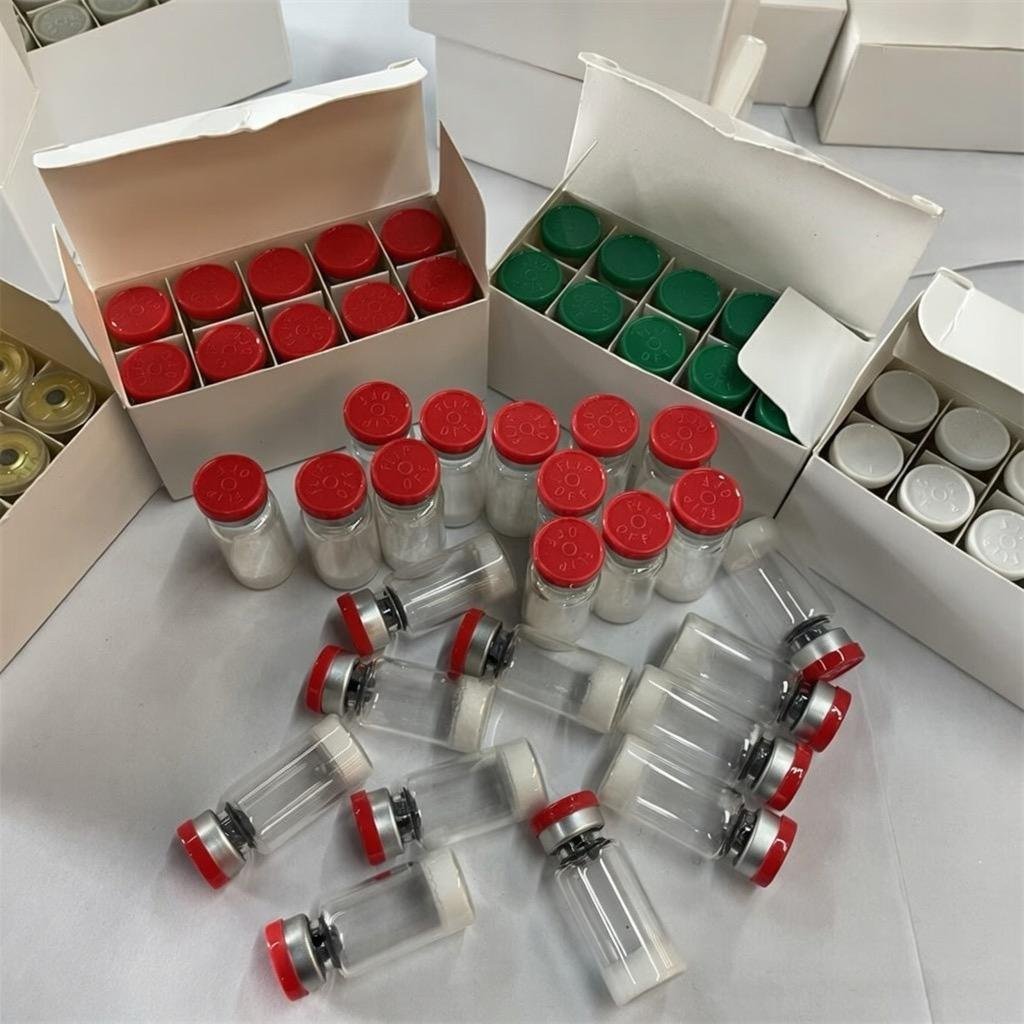
Epithalon Research Peptide: A Pineal Tetrapeptide for Telomerase, Aging & Neuroendocrine Studies
If your research investigates telomere biology, cellular senescence, or the neuroendocrine regulation of aging, Epithalon research peptide (also known as Epitalon or Epithalone) offers a precisely defined and extensively studied synthetic tool. Epithalon is a synthetic tetrapeptide with the sequence Ala‑Glu‑Asp‑Gly (AEDG), developed based on the amino acid composition of Epithalamin, a bovine pineal gland extract. It was first developed over 25 years ago by the research group led by V.K. Khavinson and V.N. Anisimov.
Since its development, Epithalon has been the subject of numerous in vitro, in vivo, and in silico studies, with results indicating significant geroprotective and neuroendocrine effects. The peptide is thought to act through several distinct mechanisms—including the upregulation of telomerase activity, modulation of melatonin synthesis, and regulation of gene expression. These diverse effects position Epithalon research peptide as a uniquely versatile tool for laboratories investigating the fundamental biology of aging, neuroendocrine signalling, and cellular regeneration.
At Wuhan Top Miracle Peptides, we supply high‑purity Epithalon research peptide to research institutions and wholesale buyers across the United Kingdom, France, Germany, Spain, Sweden, Italy, and the USA. Every batch is lyophilised, HPLC‑verified to ≥98% purity, and accompanied by a Certificate of Analysis (COA), ensuring your investigations into telomere biology, aging, and neuroendocrine regulation begin with uncompromising quality.
What Is Epithalon and How Does It Work?
To fully appreciate the research potential of Epithalon research peptide, it is essential to understand its biochemical design and the diverse mechanisms by which it exerts its pleiotropic effects.
The AEDG Tetrapeptide
Epithalon is a synthetic tetrapeptide with the sequence Ala‑Glu‑Asp‑Gly (AEDG). Its molecular formula is C₁₄H₂₂N₄O₉, and its molecular weight is approximately 390.34‑390.35 g/mol. It has a CAS number of 307297‑39‑8.
The peptide is the synthetic version of the active component of Epithalamin, a polypeptide complex extracted from the bovine pineal gland. Its short, defined sequence makes it a precise tool for studying peptide‑mediated signalling and regulatory pathways.
Mechanism of Action: Telomerase Activation and Beyond
The biological activity of Epithalon research peptide is mediated through several intersecting mechanisms:
Telomerase Activation and Telomere Elongation
Epithalon induces telomerase activity and telomere elongation in human somatic cells. This occurs through the upregulation of hTERT mRNA expression and telomerase enzyme activity. The peptide can penetrate through the cell membrane and enter the nucleus, where it increases the transcriptional levels of genes such as Nestin and GAP43.
Neuroendocrine and Pineal Signalling
Epithalon exerts a direct influence on melatonin synthesis, reflecting its pineal‑related origins. It also alters the mRNA levels of interleukin‑2 and modulates the mitogenic activity of murine thymocytes. The peptide enhances the activity of various enzymes, including acetylcholinesterase (AChE), butyrylcholinesterase (BuChE), and telomerase.
Geroprotective Effects
Research indicates significant geroprotective effects resulting from the peptide’s antioxidant, neuro‑protective, and antimutagenic properties. Studies have shown that Epithalon can influence age‑related changes and improve functional outcomes in various tissue models, including hereditary retinal degeneration.
Gene Expression Modulation
Epithalon modifies the expression of multiple transcripts in the brain. The precise mechanism of action remains an active area of investigation, with research diversifying to explore both the methodologies employed and the criteria examined.
Key Research Applications for Epithalon
Epithalon research peptide is a versatile tool with applications spanning several domains of biomedical research.
1. Telomerase & Telomere Biology Research
The most extensively studied application of Epithalon lies in its ability to upregulate telomerase activity and elongate telomeres. Research has demonstrated:
-
Telomerase Upregulation: Epithalon induces telomerase enzyme activity in human somatic cells.
-
Telomere Elongation: The peptide extends telomere length in normal healthy mammalian cells.
-
hTERT Expression: Epithalon upregulates hTERT mRNA expression.
-
Alternative Lengthening of Telomeres (ALT): The peptide may also influence ALT activity.
2. Aging & Geroprotection Research
Epithalon has been extensively studied for its geroprotective properties. Research applications include:
-
Cellular Senescence: Investigating how Epithalon modulates aging‑related processes in cultured cells.
-
Life Extension: Exploring the peptide’s potential to extend lifespan and healthspan.
-
Age‑Related Decline: Studying how Epithalon influences age‑specific changes in various tissues.
-
Antioxidant Effects: Investigating the peptide’s antioxidant properties and their role in geroprotection.
3. Neuroendocrine & Pineal Research
Given its pineal origins, Epithalon is a valuable tool for neuroendocrine research:
-
Melatonin Synthesis: Studying how Epithalon influences melatonin production.
-
Gene Expression: Investigating how Epithalon modifies gene expression in the brain.
-
Pineal Function: Exploring the role of pineal‑derived peptides in neuroendocrine regulation.
4. Neuroprotection & Retinal Research
Epithalon has demonstrated neuroprotective properties in several research models:
-
Retinal Degeneration: Studies have shown that Epithalon administration protects morphological structure, increases bioelectrical activity, and improves function in models of hereditary retinal degeneration.
-
Proliferative Activity: Epithalon stimulates the proliferation of retinal and pigmented epithelial cells.
-
Neuroprotection: The peptide exhibits neuro‑protective effects.
5. Immunology & Cellular Signalling Research
Epithalon has been studied for its effects on immune cells and signalling pathways:
-
Thymocyte Activity: The peptide modulates the mitogenic activity of murine thymocytes.
-
Cytokine Modulation: Epithalon alters interleukin‑2 mRNA levels.
-
Anti‑Apoptotic Effects: Epithalon inhibits physiologically programmed cell death.
6. Anticancer Research
Epithalon has been investigated for its potential anticancer properties:
-
Tumour Suppression: The peptide suppresses spontaneous mammary tumours and inhibits carcinogenesis.
-
Oncogene Expression: Its mode of action involves suppressing oncogene expression.
-
Antimutagenic Effects: Epithalon exhibits antimutagenic properties.
Chemical & Physical Specifications
Accurate characterisation of Epithalon research peptide is essential for reproducible experimental design.
| Parameter | Specification |
|---|---|
| Common Names | Epithalon, Epitalon, Epithalone |
| Amino Acid Sequence (One‑Letter) | AEDG |
| Amino Acid Sequence (Three‑Letter) | Ala‑Glu‑Asp‑Gly |
| Molecular Formula | C₁₄H₂₂N₄O₉ |
| Molecular Weight | ~390.34‑390.35 g/mol |
| CAS Number | 307297‑39‑8 |
| Purity | ≥98% (HPLC verified) |
| Appearance | White to off‑white lyophilised powder |
| Solubility | Soluble in sterile water and sterile PBS (pH 5‑7) |
| Storage (Lyophilised) | –20°C, sealed, protected from light; stable for up to 3 years |
| Storage (Reconstituted) | 2‑8°C for short‑term use; single‑use aliquots at –20°C for up to 6 months |
Note: The mass refers to the weight of the peptide in its lyophilised form. Epithalon is typically supplied as a TFA or acetate salt, which enhances aqueous solubility.
Reconstitution & Handling Protocol for Epithalon
Proper reconstitution of Epithalon research peptide is critical for maintaining its structural integrity and biological activity.
Step 1 – Preparation
-
Bring the sealed Epithalon vial and your chosen diluent (sterile bacteriostatic water or sterile PBS, pH 5‑7) to room temperature. Condensation can degrade the lyophilised powder.
-
Clean your work surface with 70% ethanol and lay out sterile syringes, alcohol wipes and a clean work mat.
Step 2 – Vial Sanitisation
-
Wipe the rubber stopper of the Epithalon vial with a fresh 70% ethanol wipe. Allow the alcohol to evaporate completely before piercing.
Step 3 – Reconstitution
-
Draw your desired volume of diluent into a sterile syringe. A typical starting concentration for research applications is 10 mg per 1 mL of diluent.
-
Insert the needle and slowly inject the diluent against the inner glass wall. Do not spray directly onto the lyophilised powder.
-
Gently swirl the vial until the solution is clear and fully dissolved. Do not shake vigorously, as shaking can cause denaturation.
Step 4 – Aliquoting & Storage
-
Immediately after dissolution, aliquot the reconstituted Epithalon into single‑use sterile vials.
-
Store aliquots at –20°C. Avoid repeated freeze‑thaw cycles, as peptides are susceptible to degradation.
-
Once thawed, store at 2‑8°C and use within a short period.
Concentration Reference Table
| Vial Mass | Diluent Volume | Final Concentration |
|---|---|---|
| 10 mg | 1.0 mL | 10 mg/mL |
| 25 mg | 2.5 mL | 10 mg/mL |
| 50 mg | 5.0 mL | 10 mg/mL |
Adjust diluent volume based on your experimental requirements. For cell culture applications, typical working concentrations may range from 0.1‑10 µM.
Storage & Stability Guidelines
| Storage Condition | Shelf Life | Notes |
|---|---|---|
| Lyophilised at –20°C, unopened | Up to 3 years | Use desiccant, protect from light |
| Lyophilised at 2‑8°C, unopened | 6‑12 months | –20°C storage is strongly preferred for long‑term stability |
| Reconstituted at 2‑8°C | Short‑term use | Use within days to weeks |
| Reconstituted aliquots at –20°C | Up to 6 months | Single freeze only; discard after thawing |
Why Choose Wuhan Top Miracle Peptides for Epithalon?
As an authentic licensed peptide supplier based in the United Kingdom, we supply Epithalon research peptide and a wide range of research‑grade compounds under rigorous quality assurance protocols, fully aligned with Google’s E‑E‑A‑T standards (Experience, Expertise, Authoritativeness, Trustworthiness).
-
Verified Purity: Independent HPLC analysis with purity guaranteed ≥98% for every batch.
-
GMP‑Compliant Manufacturing: All peptides are synthesised under strict quality control conditions.
-
Full Traceability: Batch‑specific Certificates of Analysis (COA) are available for every order.
-
Wholesale Supply: We serve research institutions, laboratories, and wholesale buyers across the UK, EU, and USA with flexible volume pricing and reliable logistics.
-
UK‑Based Regulatory Compliance: All products are supplied strictly as research‑grade chemicals for laboratory use only (RUO).
Researchers across the United Kingdom—including those at leading institutions in London, Cambridge, Oxford, Manchester, and Edinburgh—trust us for fast domestic delivery, transparent documentation and professional technical support.
FAQ: Epithalon Research Peptide
What is Epithalon research peptide?
Epithalon (also known as Epitalon or Epithalone) is a synthetic tetrapeptide (Ala‑Glu‑Asp‑Gly, AEDG) developed based on the amino acid composition of Epithalamin, a bovine pineal gland extract. It is used in research to study telomerase activation, cellular aging, and neuroendocrine regulation.
What is the sequence and molecular weight of Epithalon?
The sequence is Ala‑Glu‑Asp‑Gly (AEDG). Its molecular formula is C₁₄H₂₂N₄O₉, and its molecular weight is approximately 390.34‑390.35 g/mol.
What are the primary research applications for Epithalon?
Epithalon is used in telomerase and telomere biology research, aging and geroprotection studies, neuroendocrine and pineal research, neuroprotection and retinal research, immunology and cellular signalling studies, and anticancer research.
What is the mechanism of action of Epithalon?
Epithalon induces telomerase activity and telomere elongation through upregulation of hTERT mRNA expression. It also influences melatonin synthesis, modulates gene expression, and exhibits antioxidant, neuro‑protective, and antimutagenic effects.
What purity does your Epithalon research peptide meet?
Our Epithalon is tested to ≥98% purity by HPLC. A Certificate of Analysis (COA) is supplied with every order.
How should I reconstitute Epithalon?
Reconstitute with sterile bacteriostatic water or sterile PBS (pH 5‑7). Allow the vial to reach room temperature, then slowly inject the diluent against the inner glass wall and swirl gently. Do not shake.
How should I store reconstituted Epithalon?
Reconstituted Epithalon should be stored at 2‑8°C for short‑term use. For longer storage, aliquot immediately into single‑use vials and store at –20°C for up to 6 months. Avoid repeated freeze‑thaw cycles.
Is Epithalon research peptide legal to purchase in the UK?
Yes. Epithalon is a laboratory reagent sold for research use only (RUO). It is fully legal to purchase, possess, and use in the United Kingdom for legitimate in‑vitro or in‑vivo scientific research, provided it is not marketed with therapeutic claims.
Does Wuhan Top Miracle Peptides ship internationally?
Yes. We ship across the EU (France, Germany, Spain, Sweden, Italy) and to the USA from our UK warehouse. Wholesale pricing is available for bulk orders.
Wholesale Epithalon Supply Across the UK and Europe
Wuhan Top Miracle Peptides supports wholesale peptide buyers in the United Kingdom and international markets.
We Support Enquiries From:
- United Kingdom
- France
- Germany
- Spain
- Sweden
- Italy
- USA
- Wider Europe
For larger Epithalon enquiries, contact our team before ordering. This helps confirm stock, documentation, shipping options, product identity, and buyer verification requirements.
Where to Source Epithalon Peptide in the UK
If you are searching for where to source Epithalon peptide in the UK, Wuhan Top Miracle Peptides provides a simple professional enquiry process.
Professional Enquiry Process
- Review the Epithalon product details.
- Check the current label and batch information.
- Confirm whether the batch is listed as Epithalon, Epitalon, Epithalone, Ala-Glu-Asp-Gly, AEDG, or another verified identity.
- Ask about COA and purity-related documentation.
- Confirm the sequence and salt form where required.
- Confirm your shipping country.
- Discuss wholesale quantity requirements.
- Complete buyer verification where required.
- Place a professional enquiry with support from our team.
Bulk Peptides Page
Shipping & Returns Page
Contact Us Page
Shop Page
Quality / Compliance Page
PubChem / NCBI reference information
Scientific or peer-reviewed reference source
GOV.UK / MHRA
Google Search Central
ASA / CAP Code Section 12
From its discovery as a synthetic derivative of pineal gland extracts to its well‑characterised role in upregulating telomerase activity, elongating telomeres, and modulating neuroendocrine function, Epithalon research peptide provides a precisely defined and extensively validated platform for advanced aging and cellular research. Its ability to influence telomere dynamics, gene expression, and cellular stress responses—supported by over two decades of peer‑reviewed research published in PMC, PubMed, and other authoritative journals—makes it a valuable addition to any laboratory investigating telomere biology, cellular senescence, neuroendocrine signalling, or geroprotection. By choosing high‑purity, lab‑verified Epithalon research peptide from Wuhan Top Miracle Peptides, you ensure that your research is built on a foundation of quality, reproducibility, and scientific integrity.
Ready to advance your research with Epithalon? Browse our product catalogue, request a wholesale quote, or contact our support team today to discuss your laboratory’s specific needs. Place your order now and receive GMP‑grade Epithalon delivered directly to your facility in the UK, EU, or USA
| Epithalon | 25mg, 50mg |
|---|
Be the first to review “Epithalon”
Related products

Reviews
There are no reviews yet.