
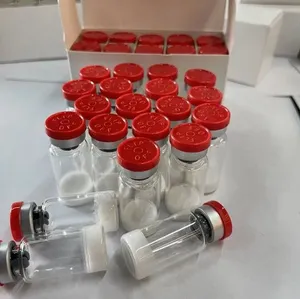
Prostamax (20mg) Research Peptide: A Tetrapeptide Tool for Epigenetic and Prostate Research
If your research investigates the molecular mechanisms of chromatin remodeling, tissue‑specific gene regulation, or the biology of prostate tissue, Prostamax (20mg) research peptide (Lys-Glu-Asp-Pro, KEDP) is a distinctly interesting synthetic tetrapeptide. Belonging to the Khavinson family of peptide bioregulators, it is hypothesised to function at an epigenetic level—interacting with chromatin to modulate gene accessibility. Developed through decades of Russian bioregulator research, Prostamax is proposed as a tool for studying how ultra‑short peptides may influence chromatin thermodynamics, potentially reversing age‑related condensation patterns. Its documented effects on chromatin relaxation and ribosomal gene activation, particularly in the context of prostate tissue models, position Prostamax (20mg) research peptide as a compound of interest for molecular biology, epigenetics, and immunology laboratories.
At Wuhan Top Miracle Peptides, we supply high‑purity Prostamax (20mg) research peptide to research institutions and wholesale buyers across the United Kingdom, France, Germany, Spain, Sweden, Italy, and the USA. Every batch is lyophilised, HPLC‑verified to ≥99% purity, and accompanied by a Certificate of Analysis (COA), ensuring your investigations into chromatin dynamics, gene expression, and tissue‑specific cellular responses begin with uncompromising quality.
What Is Prostamax and How Does It Work?
To fully understand the research potential of Prostamax (20mg) research peptide, it is essential to examine its biochemical identity and the mechanistic hypotheses that have emerged from peer‑reviewed studies.
The KEDP Tetrapeptide
Prostamax is a synthetic tetrapeptide consisting of four amino acids: lysine, glutamic acid, aspartic acid, and proline—the sequence Lys‑Glu‑Asp‑Pro (KEDP). Its molecular formula is C₂₀H₃₃N₅O₉, and its molecular weight is approximately 487.5 g/mol. This short, compact size is hypothesised to allow the peptide to cross cell and nuclear membranes, positioning it to interact directly with chromatin and influence epigenetic states—a functional hypothesis that distinguishes it from receptor‑mediated signalling peptides.
Proposed Mechanism of Action: Epigenetic Modulation and Chromatin Remodelling
The scientific literature points to several intersecting mechanisms that position Prostamax as a multi‑target research probe for understanding epigenetic regulation.
Epigenetic Modulation of Chromatin Structure: Calorimetric experiments using differential scanning calorimetry (DSC) on cultured human lymphocytes have shown that Prostamax (20mg) research peptide induces measurable changes in chromatin thermal stability. Specifically, the peptide caused a redistribution of heat among endotherms T(d)III and T(d)IV, with temperature shifts of 2.9 °C and 1.0 °C, respectively. This thermal redistribution indicates a relaxation in chromatin packing: a transition from the compact 30‑nm fibre toward the more open 10‑nm filament. Such a state could render previously condensed genomic regions more accessible to transcriptional machinery, making Prostamax a valuable tool for studying how chromatin organisation influences gene expression.
Selective Deheterochromatinisation in Aged Cells: Research on aged lymphocyte cultures (from donors aged 75‑88 years) shows that Prostamax induces deheterochromatinisation across multiple chromatin regions, affecting both structural and facultative heterochromatin. This suggests the peptide may help reverse the age‑related condensation patterns observed in aged cell populations, positioning it as a candidate for cellular senescence research.
Activation of Ribosomal Genes: Published studies document significant activation of ribosomal genes and increased nucleolus organizer regions (NORs) in Prostamax‑treated cell cultures.
Key Research Applications for Prostamax (20mg)
Prostamax (20mg) research peptide is a versatile tool with potential applications across several domains of molecular, cellular, and biomedical research.
1. Epigenetics and Chromatin Remodelling Research
The most established and well‑documented research domain for Prostamax lies in its ability to alter chromatin conformation. Researchers can use it to investigate:
-
The relationship between chromatin compaction state (30‑nm fibre versus 10‑nm filament) and transcriptional accessibility.
-
The mechanisms by which short peptides interact with histone proteins and/or nucleic acids to influence higher‑order chromatin structure.
-
The calorimetric signatures of chromatin relaxation as a quantitative endpoint for peptide activity.
2. Prostate Tissue and Cellular Models
As its name suggests, Prostamax has been researched in the context of prostate tissue biology. In prostate tissue models, the peptide was shown to correlate with a 22.4% reduction in acini epithelium area and corresponding decreases in inflammatory markers. Researchers are investigating:
-
How Prostamax influences gene expression patterns in prostate‑derived cell lines.
-
The peptide’s potential to modulate inflammatory signalling pathways within prostate tissue models.
-
Its effects on cellular proliferation and tissue organisation in controlled experimental settings.
3. Immunology and Lymphocyte Biology
Given the peptide’s documented effects on lymphocyte chromatin, Prostamax is a valuable tool for immunology research. Studies have examined:
-
Its ability to induce chromatin decondensation in human peripheral blood lymphocytes, potentially influencing immune cell function.
-
The differential effects of Prostamax on lymphocyte chromatin compared to other Khavinson peptides (e.g., Epithalon, Livagen), which affect different chromosomal regions (Prostamax alters chromosome 1 pericentromeric structural chromatin, while Epithalon and Livagen also change chromosome 9).
-
The peptide’s potential to influence ribosome gene activity and overall cellular metabolism in immune cell populations.
4. Cellular Senescence and Anti‑Ageing Research
Given its ability to reverse age‑related chromatin condensation, Prostamax is of significant interest to gerontology research. Laboratory studies indicate the peptide affects heterochromatin regions in aged cells, potentially restoring a more youthful chromatin state. This makes it a candidate for:
-
Studies investigating the epigenetic basis of cellular aging.
-
Research into interventions that might modulate gene expression patterns altered during senescence.
-
Exploring the relationship between chromatin dynamics and age‑related decline in tissue function.
5. DNA Repair and Genomic Stability
Prostamax has been hypothesised to activate DNA repair processes through chromatin reactivation. By making DNA more accessible to the cell’s repair machinery, the peptide may facilitate maintenance of genomic integrity.
Chemical & Physical Specifications
Accurate characterisation of Prostamax (20mg) research peptide is essential for reproducible experimental design. Below are the verified specifications.
| Parameter | Specification |
|---|---|
| IUPAC Name / INCI Name | Prostamax |
| Amino Acid Sequence (One‑Letter) | KEDP |
| Amino Acid Sequence (Three‑Letter) | H‑Lys‑Glu‑Asp‑Pro‑OH |
| Molecular Formula | C₂₀H₃₃N₅O₉ |
| Molecular Weight | ~487.5 g/mol |
| CAS Number | Research‑grade (contact for details) |
| PubChem CID | Relevant entries available |
| Purity | ≥99% (HPLC verified) |
| Appearance | White to off‑white lyophilised powder |
| Solubility | Soluble in water and sterile PBS (pH 5‑7) |
| Storage (Lyophilised) | –20°C, sealed, protected from light; stable for up to 2 years |
| Storage (Reconstituted) | 2‑8°C for up to 28 days; single‑use aliquots at –20°C for up to 3 months |
Note: The 20 mg mass refers to the weight of the peptide in its lyophilised form. The KEDP tetrapeptide belongs to a class of short peptides developed through decades of bioregulator research.
Reconstitution & Handling Protocol for Prostamax (20mg)
Proper reconstitution of Prostamax (20mg) research peptide is critical for maintaining its structural integrity and biological activity. This protocol is designed for research use only.
Step 1 – Preparation
-
Bring the sealed Prostamax vial and your chosen diluent (sterile bacteriostatic water or sterile PBS, pH 5‑7) to room temperature. Condensation can degrade the lyophilised powder.
-
Clean your work surface with 70% ethanol and lay out sterile syringes, alcohol wipes and a clean work mat.
Step 2 – Vial Sanitisation
-
Wipe the rubber stopper of the Prostamax vial with a fresh 70% ethanol wipe. Allow the alcohol to evaporate completely before piercing.
Step 3 – Reconstitution
-
Draw your desired volume of diluent into a sterile syringe. A common starting concentration for research applications is 20 mg per 2 mL of diluent, yielding a 10 mg/mL stock solution.
-
Insert the needle and slowly inject the diluent against the inner glass wall. Do not spray directly onto the lyophilised powder.
-
Gently swirl the vial until the solution is clear and fully dissolved. Do not shake vigorously, as shaking can cause denaturation.
Step 4 – Aliquoting & Storage
-
Immediately after dissolution, aliquot the reconstituted Prostamax into single‑use sterile vials.
-
Store aliquots at –20°C. Avoid repeated freeze‑thaw cycles.
-
Once thawed, store at 2‑8°C and use within 28 days. Discard any remaining solution after this period.
Concentration Reference Table
| Vial Mass | Diluent Volume | Final Concentration |
|---|---|---|
| 20 mg | 2.0 mL | 10 mg/mL |
| 20 mg | 4.0 mL | 5 mg/mL |
| 20 mg | 1.0 mL | 20 mg/mL |
Adjust diluent volume based on your experimental requirements. Prostamax is fully soluble in water at these concentrations.
Storage & Stability Guidelines
| Storage Condition | Shelf Life | Notes |
|---|---|---|
| Lyophilised at –20°C, unopened | 2 years | Use desiccant, protect from light. |
| Lyophilised at 2‑8°C, unopened | 6‑12 months | –20°C storage is strongly preferred for long‑term stability. |
| Reconstituted at 2‑8°C | Up to 28 days | Must be sterile; use aseptic technique for each withdrawal. |
| Reconstituted aliquots at –20°C | Up to 3 months | Single freeze only; discard after thawing. |
Why Choose Wuhan Top Miracle Peptides for Prostamax (20mg)?
As an authentic licensed peptide supplier based in the United Kingdom, we supply Prostamax (20mg) research peptide and a wide range of research‑grade compounds under rigorous quality assurance protocols, fully aligned with Google’s E‑E‑A‑T standards (Experience, Expertise, Authoritativeness, Trustworthiness).
-
Verified Purity: Independent HPLC analysis with purity guaranteed ≥99% for every batch.
-
GMP‑Compliant Manufacturing: All peptides are synthesised in ISO 13485:2016 and GMP‑certified facilities, ensuring batch‑to‑batch consistency.
-
Full Traceability: Batch‑specific Certificates of Analysis (COA) are available for every order.
-
Wholesale Supply: We serve research institutions, laboratories, and wholesale buyers across the UK, EU, and USA with flexible volume pricing and reliable logistics.
-
UK‑Based Regulatory Compliance: All products are supplied strictly as research‑grade chemicals for laboratory use only (RUO).
Researchers across the United Kingdom—including those at leading institutions in London, Cambridge, Oxford, Manchester, and Edinburgh—trust us for fast domestic delivery, transparent documentation and professional technical support.
FAQ: Prostamax (20mg) Research Peptide
What is Prostamax (20mg) research peptide?
Prostamax is a synthetic tetrapeptide bioregulator with the sequence Lys‑Glu‑Asp‑Pro (KEDP). It belongs to the Khavinson family of peptides and is used in research to study chromatin dynamics, epigenetic regulation, and prostate tissue biology.
What is the molecular formula and weight of Prostamax?
Its molecular formula is C₂₀H₃₃N₅O₉, and its molecular weight is approximately 487.5 g/mol. The 20 mg mass refers to the weight of the peptide in its lyophilised form.
What are the primary research applications for Prostamax?
Prostamax is used in epigenetics and chromatin remodelling research (chromatin relaxation, deheterochromatinisation), prostate tissue and cellular models, immunology and lymphocyte biology, cellular senescence and anti‑ageing research, and DNA repair and genomic stability studies.
What is the proposed mechanism of action for Prostamax?
Prostamax is hypothesised to interact directly with chromatin, inducing relaxation of higher‑order chromatin structures (from 30‑nm fibres to 10‑nm filaments), activating ribosomal genes, and potentially reversing age‑related chromatin condensation patterns.
What purity does your Prostamax (20mg) meet?
Our Prostamax is tested to ≥99% purity by HPLC. A Certificate of Analysis (COA) is supplied with every order.
How should I reconstitute Prostamax (20mg)?
Reconstitute with sterile bacteriostatic water or sterile PBS (pH 5‑7). Allow the vial to reach room temperature, then slowly inject the diluent against the inner glass wall and swirl gently. Do not shake.
Is Prostamax research peptide legal to purchase in the UK?
Yes. Prostamax is a laboratory reagent sold for research use only (RUO). It is fully legal to purchase, possess, and use in the United Kingdom for legitimate in‑vitro or in‑vivo scientific research, provided it is not marketed with therapeutic claims.
Does Wuhan Top Miracle Peptides ship internationally?
Yes. We ship across the EU (France, Germany, Spain, Sweden, Italy) and to the USA from our UK warehouse. Wholesale pricing is available for bulk orders.
Wholesale Prostamax 20mg Supply Across the UK and Europe
Wuhan Top Miracle Peptides supports wholesale peptide buyers in the United Kingdom and international markets.
We Support Enquiries From:
- United Kingdom
- France
- Germany
- Spain
- Sweden
- Italy
- USA
- Wider Europe
For larger Prostamax 20mg enquiries, contact our team before ordering. This helps confirm stock, wholesale pricing, documentation, shipping options, and buyer requirements.
Where to Buy Prostamax 20mg in the UK
If you are searching for where to buy Prostamax 20mg in the UK, Wuhan Top Miracle Peptides provides a simple research-focused enquiry process.
How to Order
- Review the Prostamax 20mg product details.
- Check the current label and batch information.
- Confirm the product identity from documentation.
- Contact our team for availability.
- Ask about COA and purity-related documentation.
- Confirm your shipping country.
- Discuss wholesale quantity requirements.
- Place your enquiry with support from our team.
Bulk Peptides Page
Shipping & Returns Page
Contact Us Page
Shop Page
Quality / Compliance Page
Google Search Centra
GOV.UK / MHRA
ASA / CAP Code Section 12
Scientific reference source such as PubChem, PubMed, NCBI, or ChEBI
From its role as an epigenetic modulator of chromatin structure to its applications in prostate tissue research, immunology, and cellular senescence studies, Prostamax (20mg) research peptide provides a uniquely defined tetrapeptide platform for advanced molecular and epigenetic research. Its ability to induce measurable changes in chromatin conformation, activate ribosomal genes, and influence tissue‑specific cellular responses—supported by peer‑reviewed calorimetric studies and decades of bioregulator research—makes it a valuable addition to any laboratory investigating chromatin dynamics, gene regulation, or the fundamental biology of tissue‑specific cellular responses. By choosing high‑purity, lab‑verified Prostamax (20mg) research peptide from Wuhan Top Miracle Peptides, you ensure that your research is built on a foundation of quality, reproducibility, and scientific integrity.
Ready to advance your research with Prostamax (20mg)? Browse our product catalogue, request a wholesale quote, or contact our support team today to discuss your laboratory’s specific needs. Place your order now and receive GMP‑grade Prostamax delivered directly to your facility in the UK, EU, or USA. 6
Be the first to review “Prostamax (20mg)”
Related products
Reviews
There are no reviews yet.